
Safer driving you can measure, and proof when it matters.
Every speeding run, harsh start and sharp turn is recorded with its evidence. One score shows which vehicles need coaching first, and road and cabin cameras show what actually happened.
Every speeding run, harsh start and sharp turn, on the record.
Each event lands in an alert queue with its evidence attached, and the serious ones stay open until a manager signs them off.
The limit you set, and every time it is broken.
The moment a vehicle goes over the limit, the alert names the vehicle, the speed, the heading and the street it happened on. Repeat offenders stand out in the queue, run after run, so the conversation with the driver starts from a record, not a rumour.
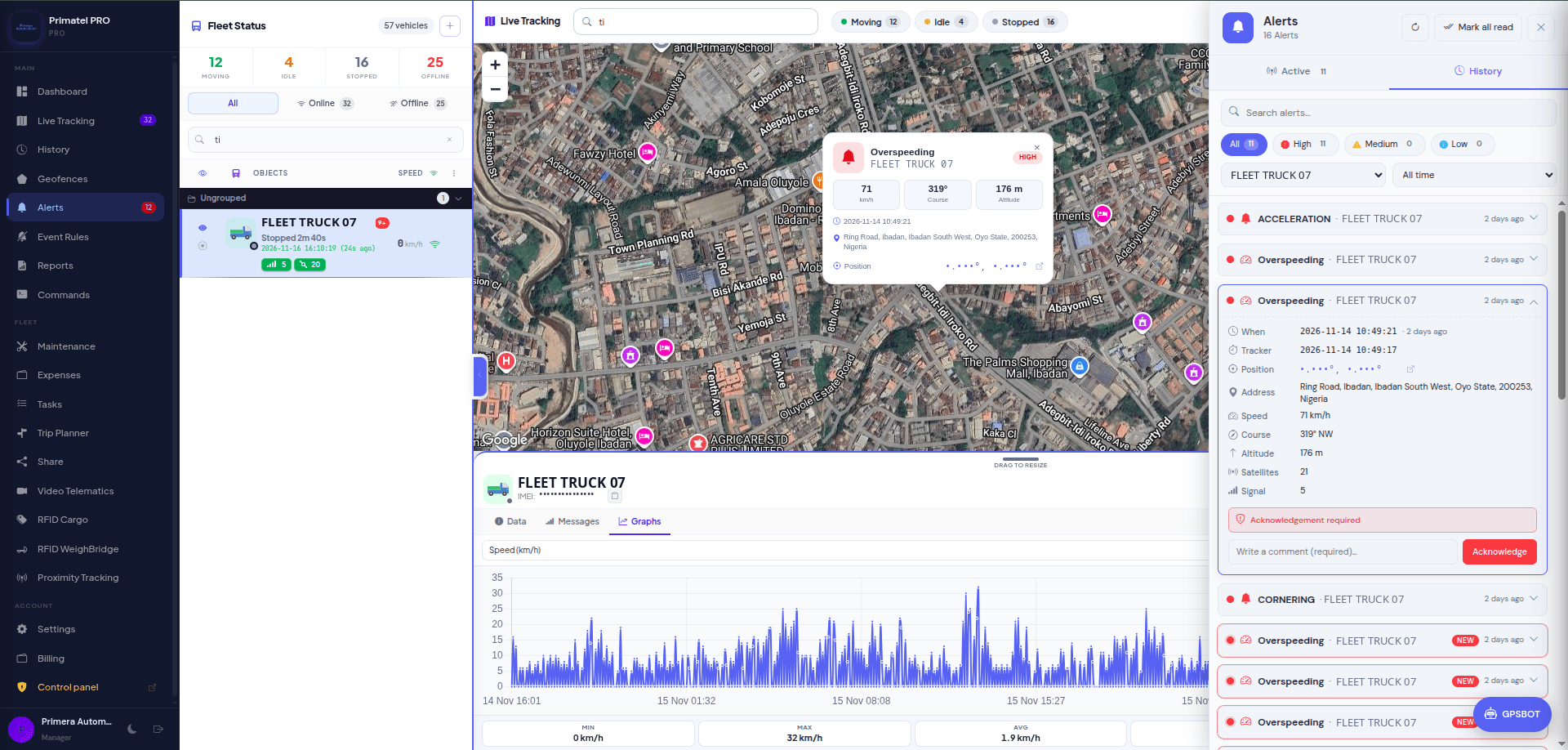
Not a notification that something happened. The evidence of what happened, where, and how sure we are.
Two timestamps
When the tracker recorded it, and when the platform received it.
Where, exactly
A pin on the map and the street address, so nobody argues about the location.
How it happened
Speed, heading and altitude at the moment of the event.
Proof the reading is sound
Satellites in view and signal strength, logged with every alert.
Severity
High, medium or low, so the queue shows what needs attention first.
A sign-off, not a shrug
High-priority alerts stay open until a manager acknowledges them with a written comment.
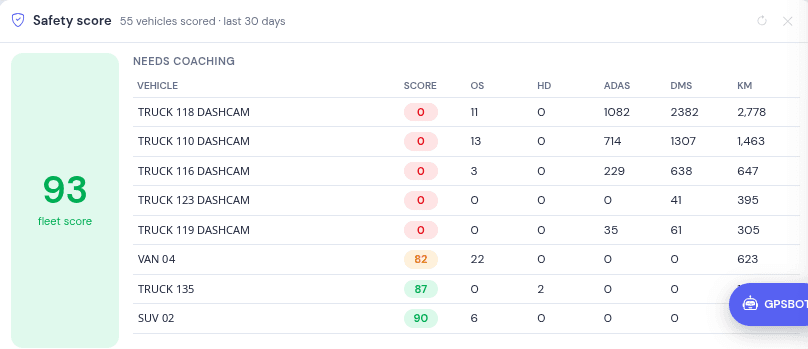
A fleet score of 93, and the five vehicles pulling it down.
Every alert feeds one number for the whole fleet. Under it, the list that matters on a Monday morning: who needs coaching first.
- Who
- The vehicles dragging the score down, worst first. Nobody has to dig through a month of alerts to find them.
- Why
- The reason sits in the row: overspeeding (OS), harsh driving (HD), road-camera alarms (ADAS), driver-camera alarms (DMS), and the kilometres driven, so a lot of alarms on a short distance stands out.
- Then
- Coach the driver, and watch the vehicle climb the table the following week. The conversation is about evidence, not opinion.
See the road and the cab, live, from your desk.
Two cameras per vehicle, streaming into the same screen as the map. You never have to phone a driver to ask what is going on.
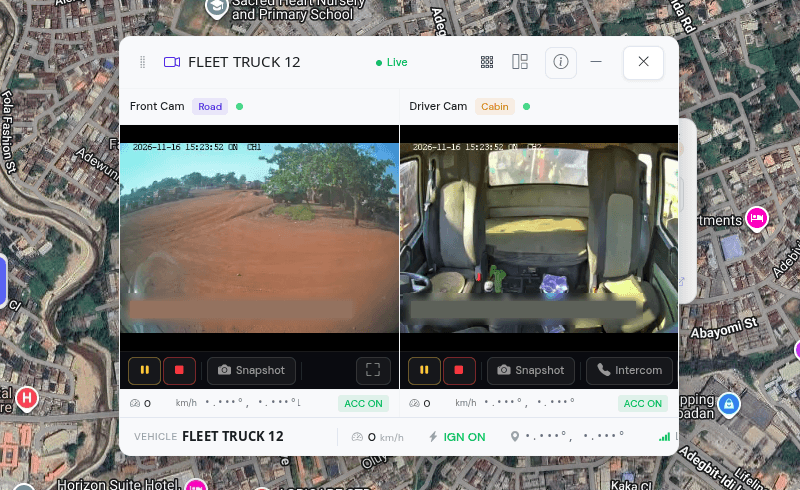
- 01Road camera
What is ahead of the vehicle, live.
- 02Cabin camera
Who is driving, and how.
- 03Snapshot
Capture a frame as evidence in one click.
- 04Intercom
Talk to the driver through the cabin unit.
- 05Engine state alongside
Ignition and accessory status beside the picture as you watch.
- 06Stamped footage
Every frame carries its date, time and camera channel.
Cameras that notice before anyone has to watch.
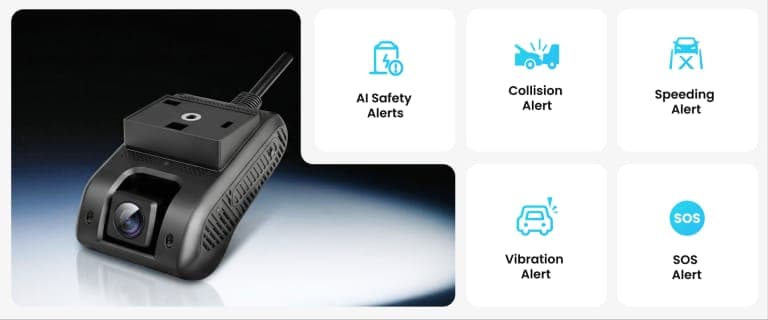
Road- and cabin-facing AI cameras that flag distraction, fatigue and tailgating as they happen, with collision, speeding and SOS alerts tied to GPS events for instant driver exoneration.
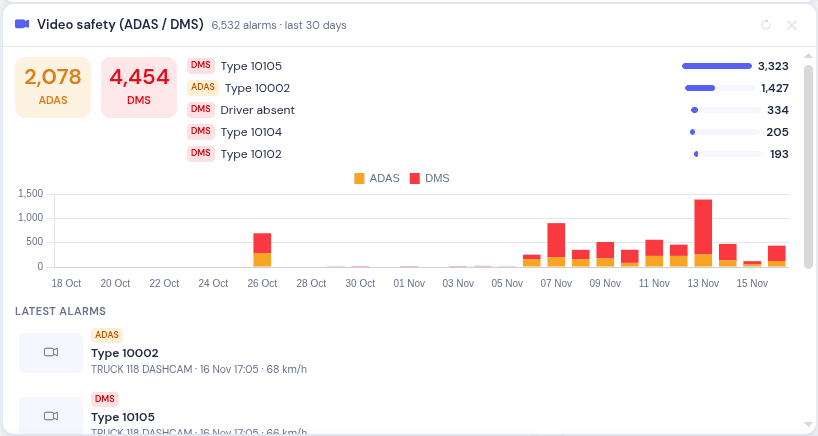
- ADAS, THE ROAD AHEAD
- The road-facing camera watches following distance and collision risk, and raises an alarm before the bumper does.
- DMS, THE DRIVER
- The cabin camera watches the driver: distraction, fatigue, and a driver missing from the seat.
- TIED TO THE GPS
- Every alarm carries the vehicle, time, position and speed, so footage and the trip record tell the same story.
Four steps, every week.
The platform does the watching. Your managers do the part only people can.
- STEP 01
Detect
Speeding, harsh acceleration, sharp cornering and camera alarms raise an alert, with the evidence attached.
- STEP 02
Review
A manager looks at the evidence. Serious alerts stay open until someone signs them off with a comment.
- STEP 03
Coach
The conversation with the driver is about the record, not opinion: the time, the place, the speed.
- STEP 04
Track
The safety score shows whether it worked. A coached vehicle climbs the table in the weeks that follow.
Fewer costly habits
Overspeeding and harsh driving raise accident risk, fuel use and wear. What gets measured gets corrected.
Evidence for disputes
Footage and GPS tied to the event, so a driver who did nothing wrong can be cleared quickly.
Fair to drivers
Every driver is judged on the same record. Good drivers can be recognised as easily as poor ones are coached.
Do we need cameras to get a safety score?
No. Speeding and harsh driving come from the tracker, so every tracked vehicle is scored. With dashcams fitted, road and driver camera alarms count too.
Can we watch the cameras live?
Yes. Open a live session from the web platform to see the road camera and the cabin camera side by side, take a snapshot or talk to the driver.
Should drivers know they are monitored?
We recommend it, and showing each driver their own score. The aim is better driving, not catching people out.
Who decides what counts as an alert?
You do. Event rules set the thresholds, and the platform watches for them on every vehicle.
The rest of Primera Fleet.
- Primera FleetWhat it does for an operation of 10 vehicles or more, and what it pays back.Back to the overview
- Fuel intelligenceWhere every litre goes, and the evidence when it leaves the tank without moving the truck.Explore fuel
- Platform tourThe dashboard, every module, the mobile app and the reports, screen by screen.Explore the platform
Find out which of your drivers need coaching first.
Tell us about your fleet and your drivers. We'll come back with a written proposal for alerts, scoring and cameras that fits how you operate.
Tell us what you want to keep an eye on.
Send us a few details and we’ll come back with a straight answer, what it would take, and what it would change for you.