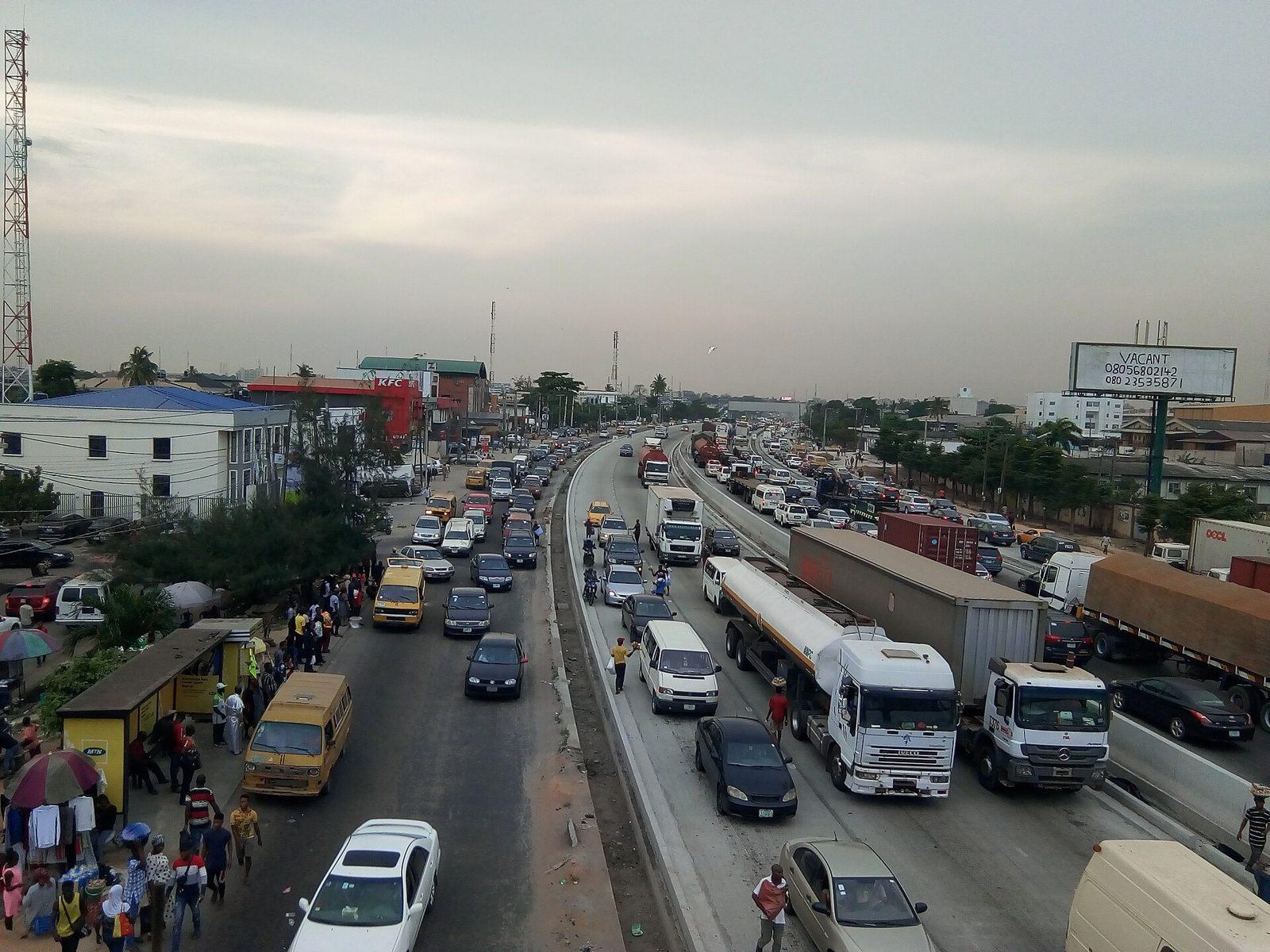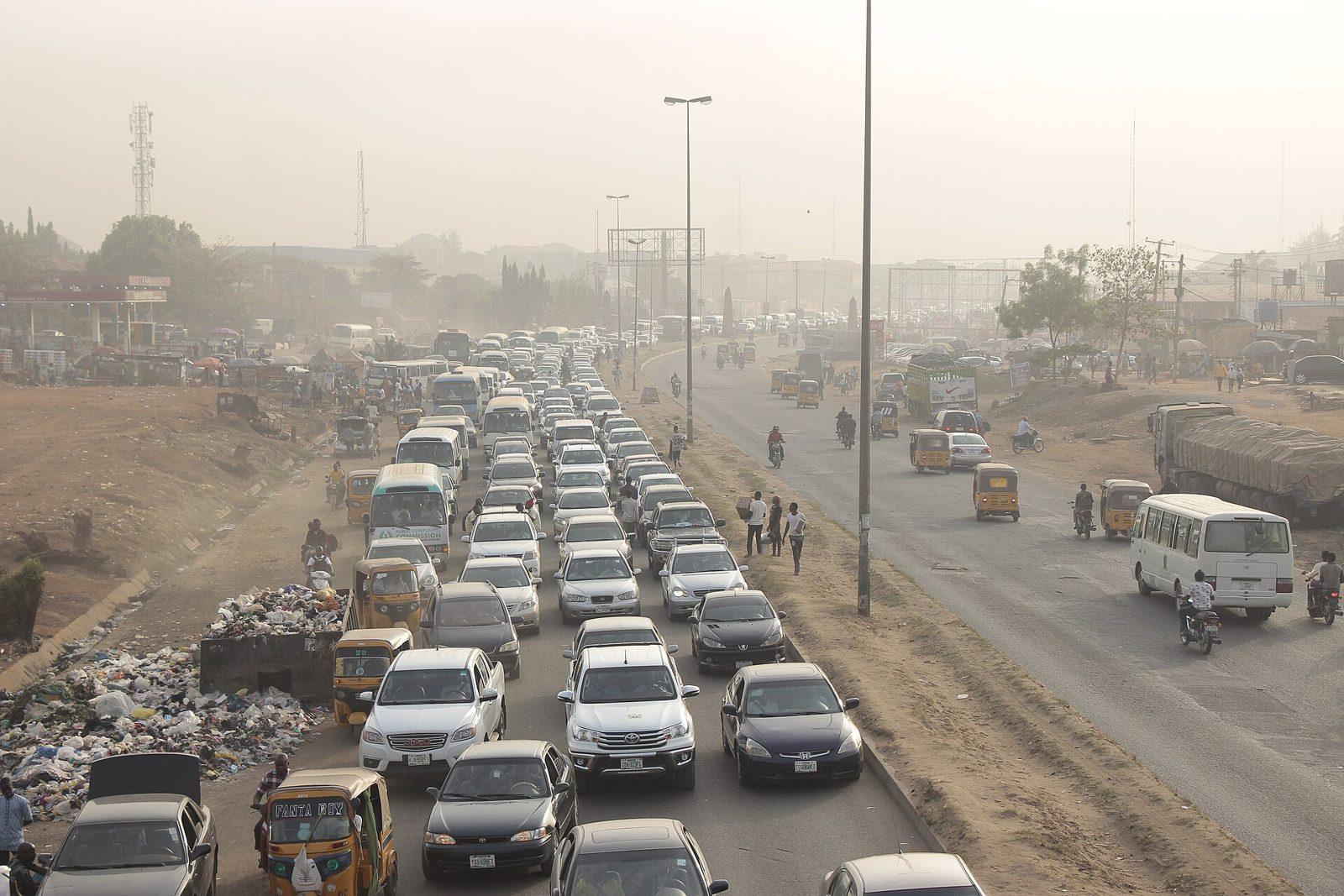
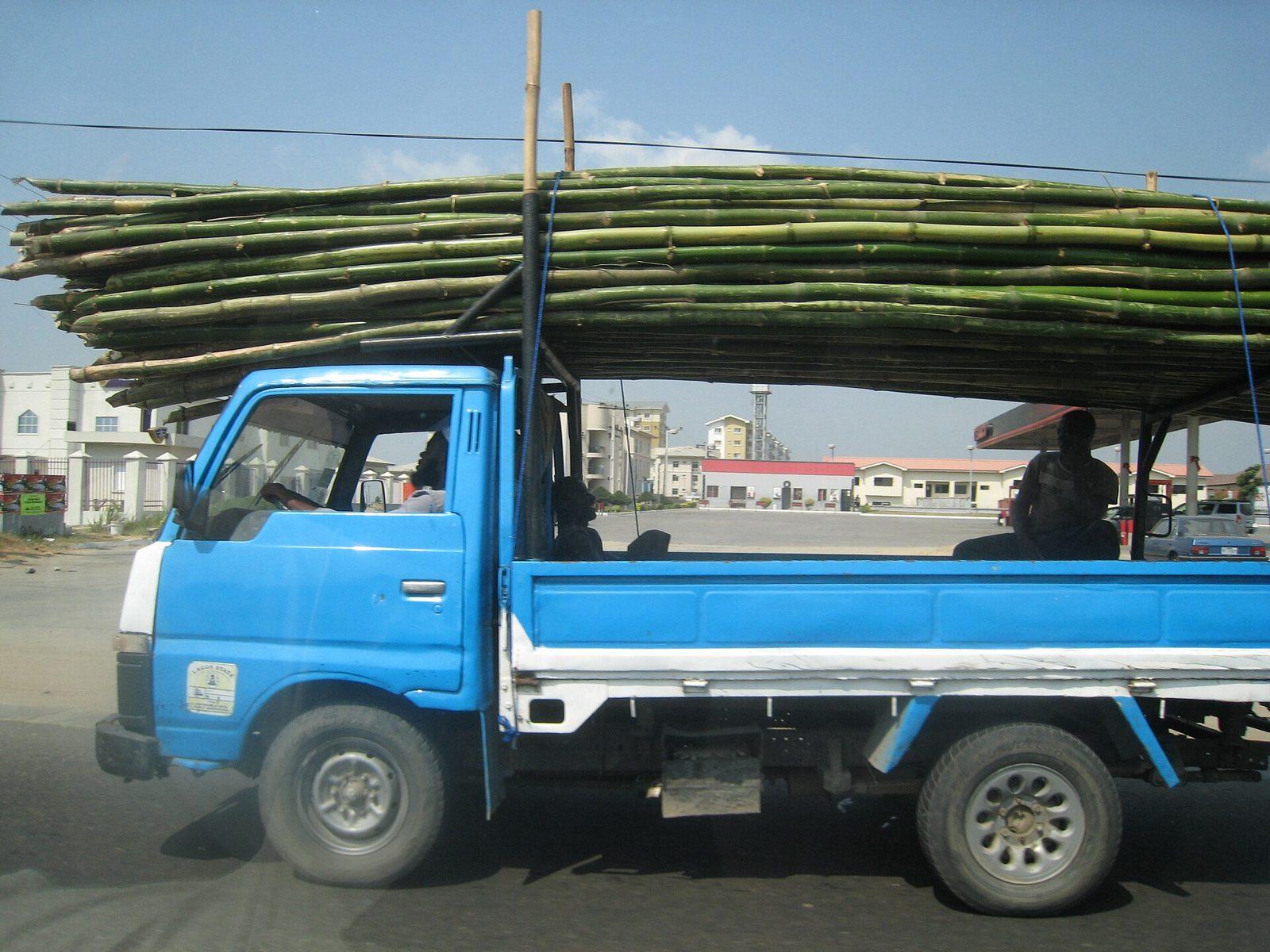
It is 5:40 a.m. at a delivery depot off the Apapa–Oshodi Expressway. Six light trucks are loading for the day's drops across Lagos, and the gateman has a clipboard. Each driver takes the pen, ticks a column of boxes marked "OK" without looking up, signs, and climbs into the cab. The whole ritual takes eleven seconds.
By mid-morning one of those trucks is parked on the hard shoulder near Mile 2 with a shredded rear tyre and a load of customer orders going nowhere. Asked later, the driver says the tyre had been going down slowly for three days. He had mentioned it to someone; nobody remembers who. The clipboard, of course, says the tyre was fine.
This is a composite, but anyone who has run a Nigerian fleet will recognise every part of it. The defect was not hidden. It was known, discussed and normalised, and the only document that existed to catch it was designed in a way that guaranteed it would not.
The numbers say the same thing at national scale. Data from the National Bureau of Statistics, reported by Nairametrics, recorded 2,328 tyre bursts, 1,879 brake failures and 1,194 cases of mechanical deficiency as crash causes between 2020 and 2022, a period in which the same report counts 11,875, 13,027 and 13,656 crashes a year. Put together, those three vehicle-condition factors were logged 5,401 times against roughly 38,500 crashes, or about one for every seven. The pattern has not shifted: in Legit.ng's analysis of 2025 crash data from the NBS and FRSC, "speed violations topped the list of causative factors, followed by tyre bursts, brake failures". For an operator, each one is a repair bill, a lost delivery day and, at worst, a death your company will have to explain.
The defect is mechanical. The decision to drive it is not.
The Federal Road Safety Corps' own training compendium makes a distinction worth pinning above every dispatcher's desk. It says mechanical factors contribute to "about 10% of the crashes on our roads", naming tyre burst and brake failure among them, while the human factor accounts for about 90%. Look closely at the human list, though, and you find "poor vehicle care" sitting alongside speed and fatigue.
That is the whole argument for a daily check in one line. A tyre does not decide to leave the depot under-inflated. A person does, usually because nobody gave them the time, the form or the authority to say "this truck should not go out today".
Nigerian regulation already expects you to have an answer. The FRSC's Road Transport Safety Standardization Scheme (RTSSS) requires operators to establish a Safety Unit headed by a Safety Manager, quoting Regulation 198(1) of the National Road Traffic Regulations 2012, and lists a comprehensive vehicle maintenance policy among fleet operators' specific mandates. It also requires "maintenance of proper record on drivers and road traffic crashes", which the same document says are mandatorily submitted to FRSC or the police on a regular basis. Operators are graded, and a top-class certification expects 80% of vehicles to be RTSSS compliant.
The written penalty for ignoring all this, a fine of ₦3,000 or six months' imprisonment under Regulation 202(4), is almost comically small. The commercial penalty is not. When something goes wrong, the first question from an investigator, an insurer or a client's lawyer is what you knew about the vehicle's condition, and when.
What the strictest regulators actually ask of a driver
You do not have to invent a standard. Two of the most mature regimes in the world have already written one, and both are refreshingly plain.
In the United States, federal rules for commercial vehicles require that before driving, a driver must "be satisfied that the motor vehicle is in safe operating condition", review the last inspection report and sign to acknowledge any repairs. At the end of each day's work, the driver prepares a driver vehicle inspection report covering, at minimum, service and parking brakes, steering, lights and reflectors, tyres, horn, wipers, mirrors, coupling devices, wheels and rims, and emergency equipment. The carrier must then certify that each listed defect has been repaired, or that repair is unnecessary, before the vehicle is operated again, and keep the paperwork for three months. Electronic records are explicitly allowed.
In Britain, the Driver and Vehicle Standards Agency tells HGV drivers to carry out a walkaround check "before your journey", report defects in writing to the person responsible, and record "nil defects" when there are none. On dangerous faults the guidance is blunt: "You must get dangerous defects fixed before you continue your journey." The Traffic Commissioners added two points in 2025 that every Nigerian operator should borrow. The check "counts as working time, and drivers must be given adequate time to complete it properly". And digital apps are welcome, but "they are support tools, not replacements for a physical inspection."
A daily check is not a form. It is a decision, made by the person who knows the vehicle best, before the vehicle becomes your liability on a public road.
The ten-minute check, adapted for Nigerian roads
Here is a starting point for a light-to-medium delivery fleet, built from the US and UK lists and adjusted for what Lagos traffic, Onitsha potholes and harmattan dust do to a vehicle. Grade every item green, amber or red, and agree in advance what each colour means.
| Area | What the driver checks | Red (do not drive) looks like |
|---|---|---|
| Tyres and wheels | Pressure by eye and gauge, cuts and bulges in sidewalls, tread, missing or loose wheel nuts, spare present | Bulge, exposed cord, visibly flat, wheel nut missing |
| Brakes | Pedal feel, handbrake holds on a slope, air build-up on air-braked trucks, any warning light | Soft pedal, air will not build, handbrake slips |
| Steering | Excess play, noise, pulling to one side | Play you can feel at the rim |
| Lights and indicators | Headlights, brake lights, indicators, reflectors, number plate light | No brake lights or no indicators |
| Visibility | Windscreen cracks in the driver's line of sight, wipers, washer fluid, mirrors fitted and adjusted | Missing mirror, wipers not working in rainy season |
| Fluids and leaks | Engine oil, coolant, fuel or oil under the vehicle overnight | Active fuel leak, coolant empty |
| Dashboard | Warning lights at start-up and after the engine runs | Oil pressure or brake warning stays on |
| Load and body | Load secured and within limits, doors and tailgate latch, tarpaulin tied | Load unsecured or obviously over the vehicle's limit |
| Safety kit | Seatbelts, horn, fire extinguisher, warning triangle, first-aid kit | Seatbelt or horn not working |
| Telematics and camera | Dashcam lens clean and unobstructed, no new loose wiring under the dash | Camera covered or wiring cut |
Amber means the vehicle can go, but the defect is reported, photographed and booked for repair by a named date. Red means the keys go back. The most important line on the whole sheet is the one nobody prints: a driver who reports a red defect is never punished for the vehicle not going out. If honesty costs the driver a day's allowance, you will get no honesty.
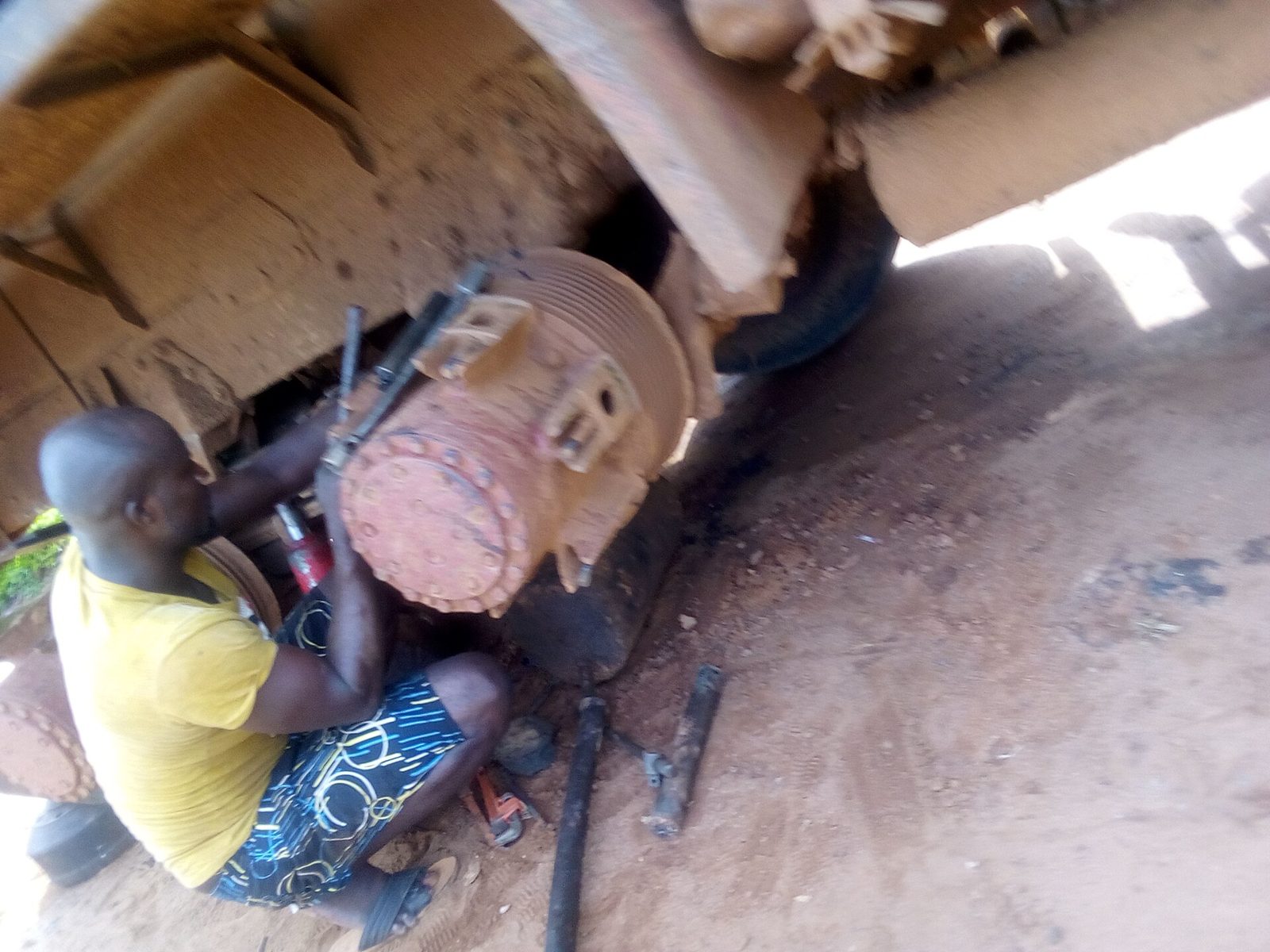
Why paper checks lie, politely
Nobody sets out to falsify a checklist. The paper form simply makes the honest answer expensive and the dishonest one free. It has no timestamp, so it can be filled in at the gate, in the canteen or at the end of the week. It has no photo, so "tyre worn" becomes a matter of opinion. It has no recipient, so a defect written on Tuesday is still sitting in a drawer on Friday. And it has no closure, so the driver who reported the same brake noise three times learns that reporting achieves nothing.
Digitising the check fixes most of that, and it does not require expensive software. A form on a phone, built in any reputable form or spreadsheet tool your company already uses, will do if it captures these fields every time:
- Vehicle registration or fleet number, chosen from a list, not typed.
- Odometer reading.
- Automatic date, time and, where the tool allows, location.
- Each check item graded green, amber or red.
- A photo required for every amber or red item.
- An explicit "no defects found" declaration when everything is green.
- The driver's name, and the person the report was sent to.
- A closure field the workshop fills in: repaired, deferred to a date, or not required, with a signature.
That last field is the American rule in miniature. A defect report that is never closed is not a record of diligence. It is evidence that you knew.
A WhatsApp group, however tempting, is not a system: messages scroll away, and three months later nobody can prove which photo belonged to which truck.
The second witness: what telemetry sees that the form does not
Even a good digital form only records what the driver chose to tell you. This is where telematics earns its place, not as a replacement for the walkaround (Primera Fleet does not run a pre-trip inspection module, and no tracker can look at a sidewall) but as a second, independent witness that tells you when the paperwork and the vehicle disagree.
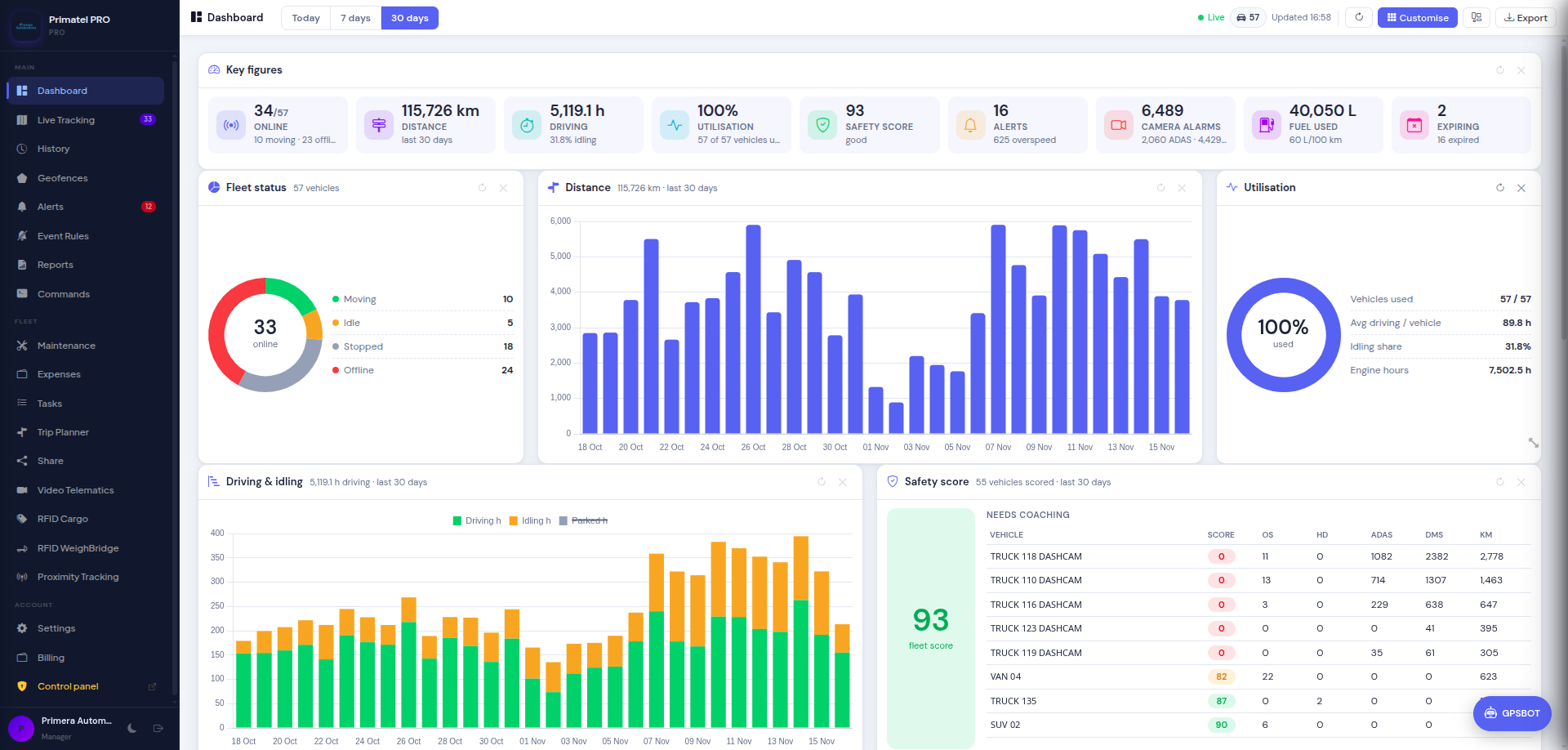
Set the two side by side each morning and patterns appear quickly:
| What the check says | What the telemetry shows | What it tells you |
|---|---|---|
| Tyres all green | Tyre-pressure monitoring, where fitted, shows one rear tyre steadily losing pressure over several days | The slow leak the driver has learned to live with |
| No defects | The Primera Fleet platform shows the vehicle's mileage-based service as overdue | A vehicle that should be in the workshop, whatever the form says |
| Check completed at 6:10 a.m. | Route playback shows the truck left the depot geofence at 5:52 a.m. | The check was filled in from the road, not at the vehicle |
| Brakes fine | A cluster of harsh-braking events, or ADAS forward-collision warnings, on the same vehicle across different drivers | Possibly the vehicle, not the driver; worth a workshop look |
| Driver fit for duty | The cabin-facing camera logs fatigue or distraction alerts in the first hour of the shift | A conversation about rest before it becomes a crash |
None of this is surveillance for its own sake. A driver whose check matches the data every day is building a record that protects them as much as you.
Primera's maintenance reminders, calculated from mileage and engine data, close the other side of the loop. The driver reports what they see and feel; the platform reports what is due. When either one raises a flag, a task in the Primera app can assign the follow-up to a named mechanic or supervisor, so it does not depend on someone remembering a phone call.
When something does go wrong: an incident report that writes half of itself
A good daily check reduces incidents. It does not abolish them. When a truck is involved in a crash, a near-miss or a breakdown, the quality of what you record in the first hour decides how well you can defend your driver, satisfy an insurer and meet the RTSSS expectation of proper crash records.
The traditional incident report is a handwritten account, produced days later and coloured by fear. A telemetry-backed report starts from facts nobody can alter:
- Exact time and location, from the tracker.
- Speed in the minutes before the event, from route history.
- Harsh braking, acceleration or cornering events, timestamped.
- Dashcam footage from the road-facing and cabin-facing cameras, where fitted, including ADAS and DMS alerts in the run-up.
- The last daily check for that vehicle, and any open defects on it.
- The maintenance status on the day.
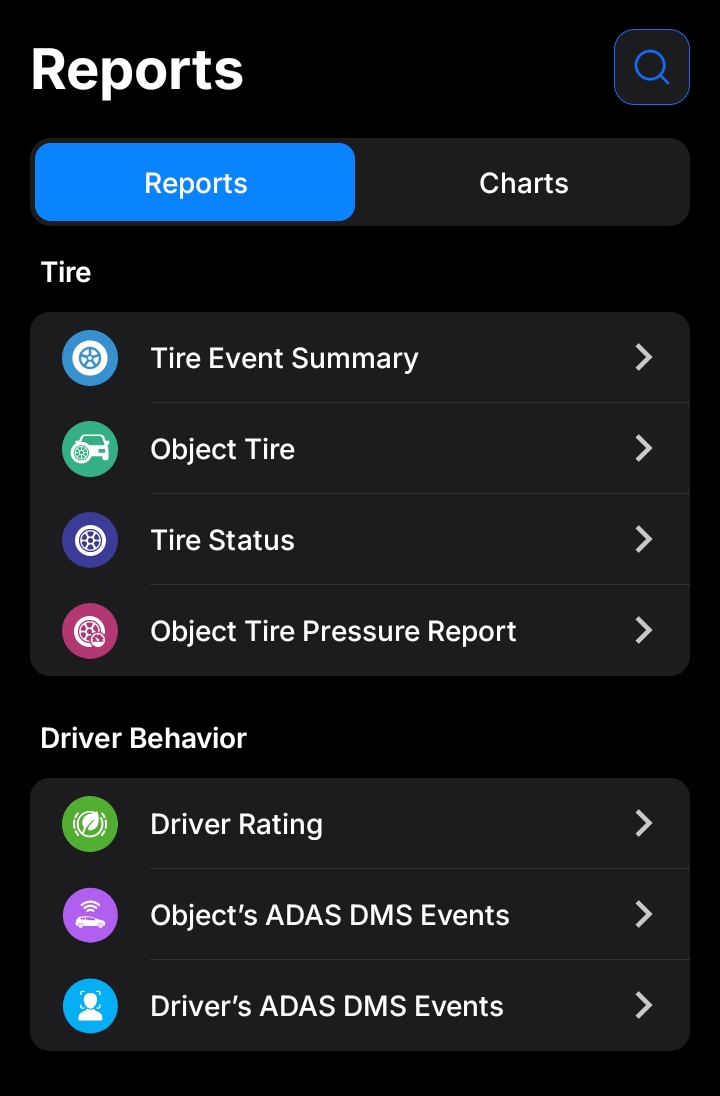
The driver then adds what only a human can: what happened, in their own words, photos of the scene and vehicles, names and phone numbers of witnesses, and the details of any FRSC or police officer who attended. Primera's driver safety tools, including scorecards and ADAS and DMS safety reports, give the safety manager the vehicle's side of the story to sit alongside the driver's.
The most valuable question in any incident review is often the dullest: was this defect already on a check sheet? If it was, and nobody closed it, the problem is your process, not your driver.
Making it stick: five numbers worth watching
Systems decay when nobody looks at them. Give your safety manager five measures and review them weekly:
- Check completion rate: the share of vehicle-days with a completed check before first movement. Below 95% is a supervision problem.
- Defects reported per 100 checks: a fleet that reports zero defects is not perfect. It is silent.
- Average time to close a defect, split by amber and red.
- Vehicles moved with an open red defect: the target is zero, and every exception gets a written explanation.
- Checks that contradict telemetry: tyre-pressure alerts, overdue maintenance or departure times that do not match the form.
Then do the thing that makes drivers believe the system is real: fix what they report, quickly, and tell them it was fixed.
What to do on Monday morning
- Name the owner. If you do not have an RTSSS Safety Manager, appoint one, even part-time, and make the daily check their system.
- Print the table above, then change it. Sit with two senior drivers and a mechanic for an hour and adapt it to your vehicles. They will spot what the template missed.
- Move it onto phones this month. Use a simple form tool with the eight fields listed. Make photos mandatory for amber and red.
- Give the check time. Build ten minutes into the shift start and say so in writing.
- Publish the no-blame rule. A red defect reported honestly never costs a driver money.
- Switch on the second witness. Make sure maintenance reminders, tyre-pressure alerts and camera events in your telematics platform go to the same person who reads the checks.
- Review one week of checks against telemetry next Friday. The gaps will tell you exactly where to start.
The best daily check is the one that occasionally keeps a truck off the road. If yours never has, it is not working yet.
About Primera Automations
Primera Automations installs and supports fleet telematics for Nigerian operators in more than 26 states. The Primera Fleet platform brings maintenance reminders, tyre-pressure monitoring, AI dashcam events and driver scorecards into one place, so the safety manager can check what drivers report against what vehicles record. Talk to us about your setup.
Sources
- Nairametrics, How speed violations led to over 18,000 road crashes in Nigeria in three years: NBS
- Legit.ng, Analysis: Road accident across Nigeria in 2025, major cause of many crashes uncovered
- Federal Road Safety Corps, RC Compendium 2023 (PDF)
- Federal Road Safety Corps, Corps Transport Standardization Office, The Road Transport Safety Standardization Scheme (RTSSS) (PDF)
- Legal Information Institute, Cornell Law School, 49 CFR § 396.13: Driver inspection
- Legal Information Institute, Cornell Law School, 49 CFR § 396.11: Driver vehicle inspection report(s)
- GOV.UK, Driver and Vehicle Standards Agency, Carry out daily HGV walkaround checks
- GOV.UK, Traffic Commissioners for Great Britain, The walkaround check: a legal duty and safety priority