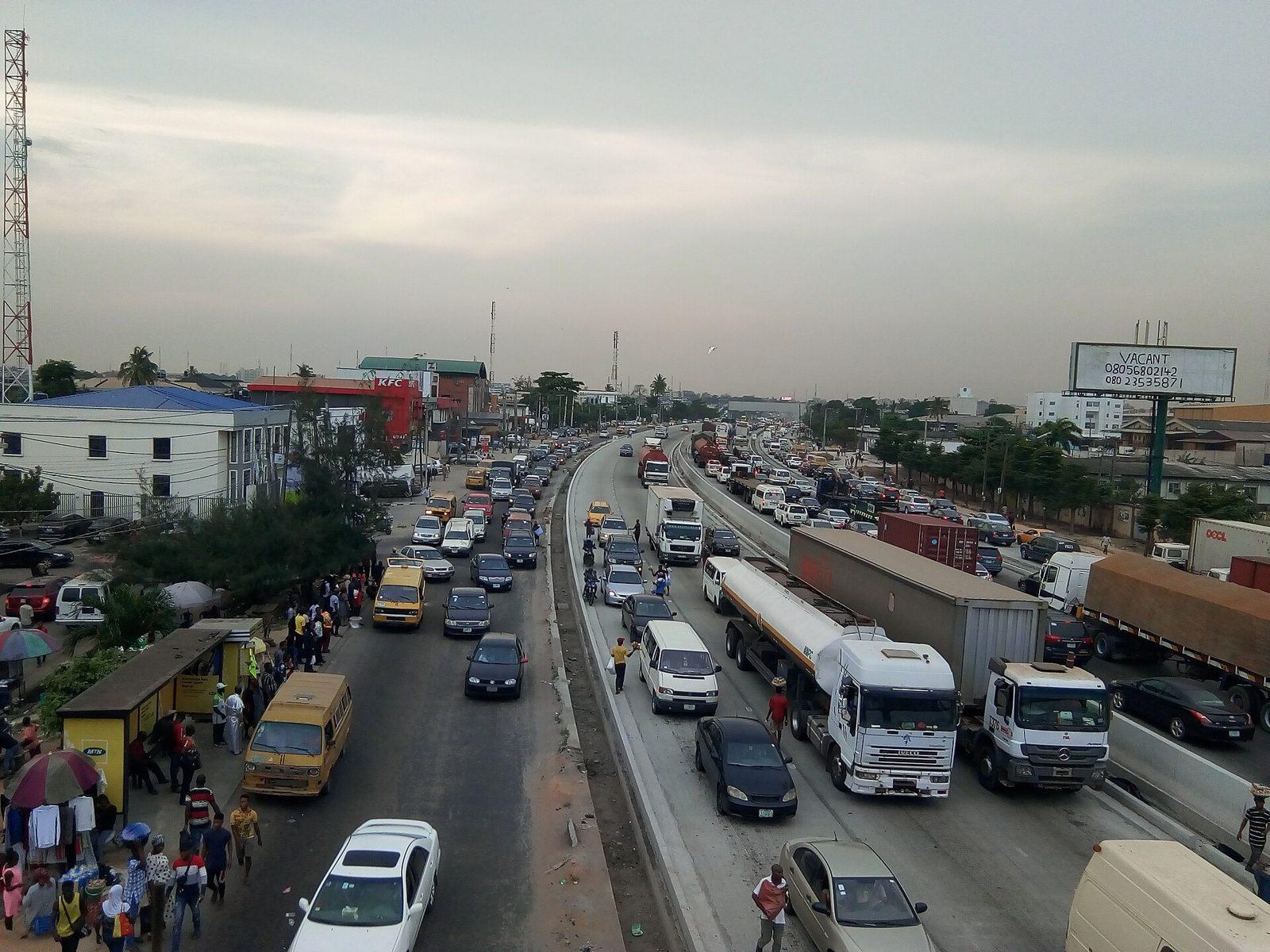
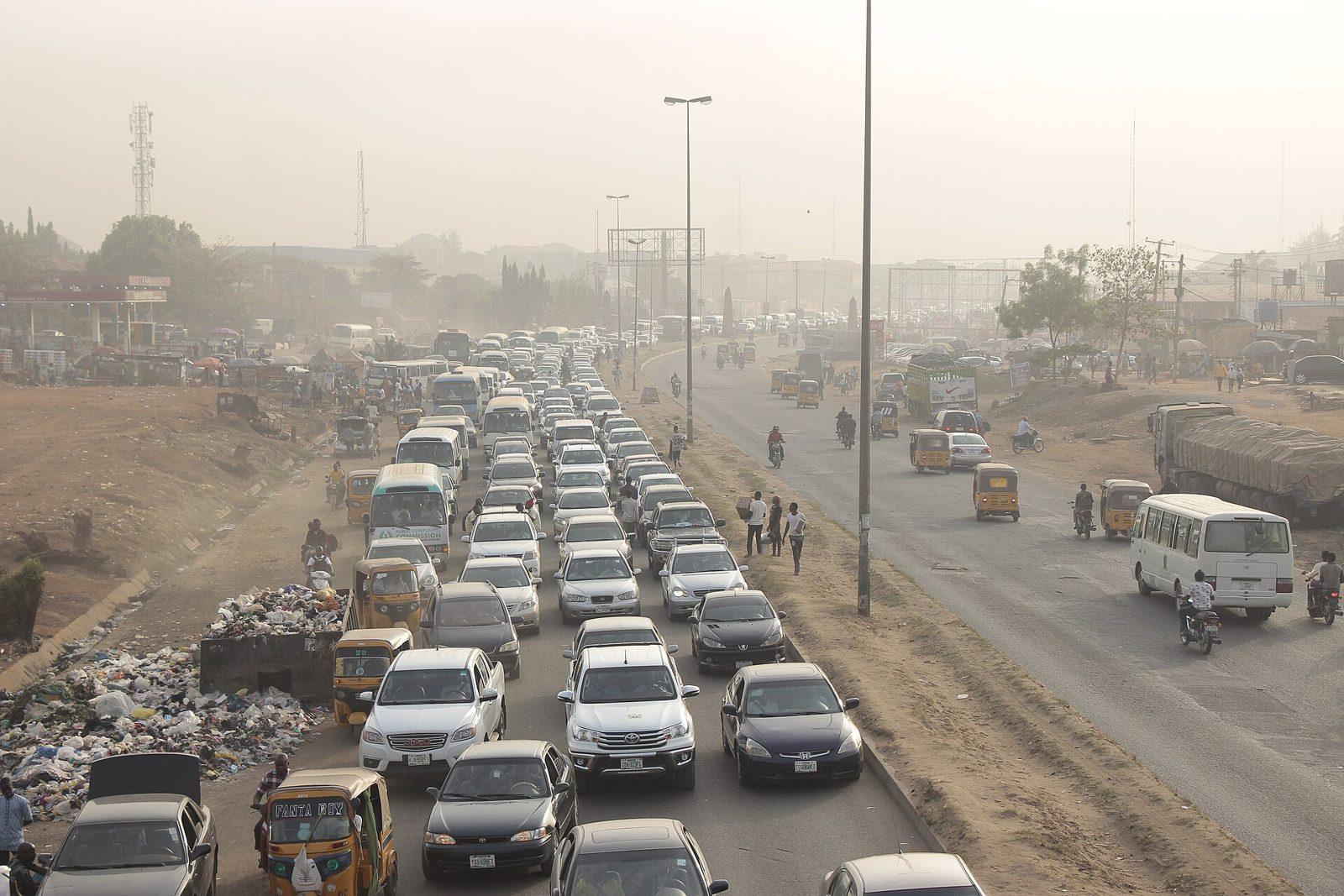
The van is back in the workshop on a Monday morning. It is a two-year-old panel van that does city drops for a distributor, eight hours a day, six days a week. The mechanic has the gearbox out again. It is the second clutch this year. The front tyres, fitted in the dry season, are already showing the wear bars. The nearside wing has a fresh crease from what the driver described as "a small touch" at a roundabout.
The fleet manager is puzzled, because on paper this is a well-behaved vehicle. It has a speed limiting device, fitted and certified. Its tracker shows it has never gone above 90 km/h. How can a van that never speeds be wearing out this fast?
(The scene is a composite, but if you run delivery vans in Lagos, Abuja or Port Harcourt you have probably sat in that workshop.) The answer is that the damage in last-mile delivery is rarely done at the top of the speedometer. It is done between 0 and 60 km/h: in the hard launch from every traffic light, the sprint to the next junction, the late stamp on the brake, the roundabout taken a little too briskly with a full load in the back. A speed limiter is not designed to catch any of that. Monitoring is. Understanding the difference, and using both, is one of the cheapest ways to cut a city fleet's accident rate and its workshop bill at the same time.
What the law already asks of you
Nigeria has had a speed limiter mandate for a decade. The Federal Road Safety Corps' official portal states that the policy applies to all vehicles nationwide, starting with commercial vehicles such as buses, trailers, tankers and trucks, with a deadline of 1 October 2016, and cites section 10(3)(m) of the FRSC (Establishment) Act 2007 and section 152(4) of the National Road Traffic Regulations 2012 as the legal basis. The portal's FAQ describes the device as one that does not allow the driver to accelerate beyond the stipulated speed limit and lists the settings: 100 km/h for private vehicles, 90 km/h for commercial vehicles, 80 km/h for 20-tonne trucks and 60 km/h for 40-tonne trucks.
The penalties are set out in the Corps' own 2016 implementation briefing, Speed Limiting Device Implementation in Nigeria: The Journey So Far. Under the amended regulations it summarises, driving a vehicle on a public road without a speed limiting device carries a ₦10,000 fine, and a fleet operator who fails or refuses to install them faces a ₦50,000 fine plus suspension of his certificate until he complies.
Compliance is still patchy. In September 2025 an FRSC spokesperson told Radio Nigeria that only about 187,000 commercial vehicles have installed the devices, with operators citing cost, poor technical support and claims that the devices hurt performance.
If your vans are not fitted, that is a legal exposure worth fixing. But the more interesting question for a fleet manager is what a limiter can and cannot do once it is fitted.
What a limiter does, and what it cannot see
The same FRSC briefing explains that active speed limiters control speed by applying counter force on the accelerator or through the engine fuel injection system. In plain terms, it is a ceiling. Press the pedal as hard as you like and the vehicle will not pass the set speed.
That ceiling is valuable on the Lagos–Ibadan Expressway. In town it barely comes into play. Look at the maximum speeds set out in Regulation 152(1) of the National Road Traffic Regulations, as reproduced in the FRSC briefing:
| Vehicle category | Built-up areas | Highways | Expressways |
|---|---|---|---|
| Cars | 50 km/h | 80 km/h | 100 km/h |
| Taxis and buses | 50 km/h | 80 km/h | 90 km/h |
| Trailers and tankers | 45 km/h | 50 km/h | 60 km/h |
Source: FRSC, citing Regulation 152(1) and Schedule 8 of the National Road Traffic Regulations 2012.
A delivery van limited to 90 km/h can still do 75 km/h through a 50 km/h built-up area without the limiter noticing. It can still go from 0 to 40 km/h in the time it takes the light to change, then brake hard for the queue fifty metres ahead, a hundred times a day. It can still take a roundabout fast enough to shift the load. None of those things is "speeding" in the sense the limiter understands.
A speed limiter answers one question: how fast can this van go? The questions that cost you money are how it gets there, and where.
The workshop bill nobody links to the driver
Aggressive urban driving does not show up as a single dramatic failure. It shows up as components that wear out faster than the manufacturer intended, and invoices that get paid without anyone asking why.
Tyres. Michelin's guidance to motorists is blunt: avoid "fast starts and panic stops", and don't speed, because high speeds can generate excessive heat, which can increase the rate of tyre wear. It lists aggressive acceleration among the causes of wear in the centre of the tread and hard cornering among the causes of wear on the shoulders. Continental makes the same point: strong acceleration and braking, plus fast cornering, increase tyre wear significantly, especially on rough and abrasive road surfaces. Anyone who has driven Nigerian city roads knows which kind of surface we have.

Clutches. Manual delivery vans live on their clutches, and city work is the hardest life a clutch can have. The AA, Britain's motoring organisation, says "riding" the clutch is the most common reason for premature clutch failure, warns that holding a vehicle on a slope with the clutch will quickly wear out the friction plate, and notes that drivers who are aggressive with the clutch pedal, and frequent stop-start traffic, both add wear. It puts typical clutch life at up to 80,000 miles, "but they can wear out more quickly depending on how you drive your car". A loaded van launched hard from every light, with the clutch slipped to make up for it, is a textbook case.

Fuel and brakes. The US Department of Energy estimates that aggressive driving (speeding, rapid acceleration and braking) can lower fuel economy by 10% to 40% in stop-and-go traffic. Every harsh launch is paid for again a few seconds later in brake pads and discs, because energy put in with the accelerator has to be taken out with the brakes. The FRSC briefing itself lists lower maintenance cost on tyres, brakes and engines among the advantages of controlling speed.
Small knocks, big numbers
The safety case is even stronger than the maintenance case. Speed is the leading cause of crashes on Nigerian roads, year after year. National Bureau of Statistics data reported by Nairametrics show that speed violations caused 18,386 road crashes between 2020 and 2022, more than any other cause. Africa Check, reviewing FRSC and NBS data, found that nearly half (47.4%) of recorded crashes in the second quarter of 2024 were attributed to speed violations, and that Nigeria recorded 5,421 road deaths from 9,570 reported crashes in 2024. For December 2025, the FRSC said speed limit violation accounted for 41 percent of all identified causes of road traffic crashes. The Corps Marshal's summary was hard to argue with: "Speed remains the single greatest threat to life on Nigerian roads."
Those national figures are dominated by highway crashes. For a city fleet, the more relevant numbers are the small ones that never make the news: the scraped bumper, the cracked headlamp, the dented door, the okada clipped at a junction. Each costs a repair, a day off the road and, sometimes, a roadside negotiation. The physics is the same as on the highway, just at lower stakes. The FRSC briefing notes that an increase in average speed of 1 km/h typically results in a 3% higher risk of a crash involving injury, and that a pedestrian struck at 30 km/h or below has a 90% chance of survival, falling below 50% at 45 km/h. In a crowded market street, the difference between 30 and 45 km/h is a driver's choice, made dozens of times a shift, and well below any limiter's ceiling.
Monitoring: the part that changes behaviour
If a limiter is a ceiling, monitoring is a mirror. It shows the driver, and you, exactly how the vehicle is being handled, event by event.
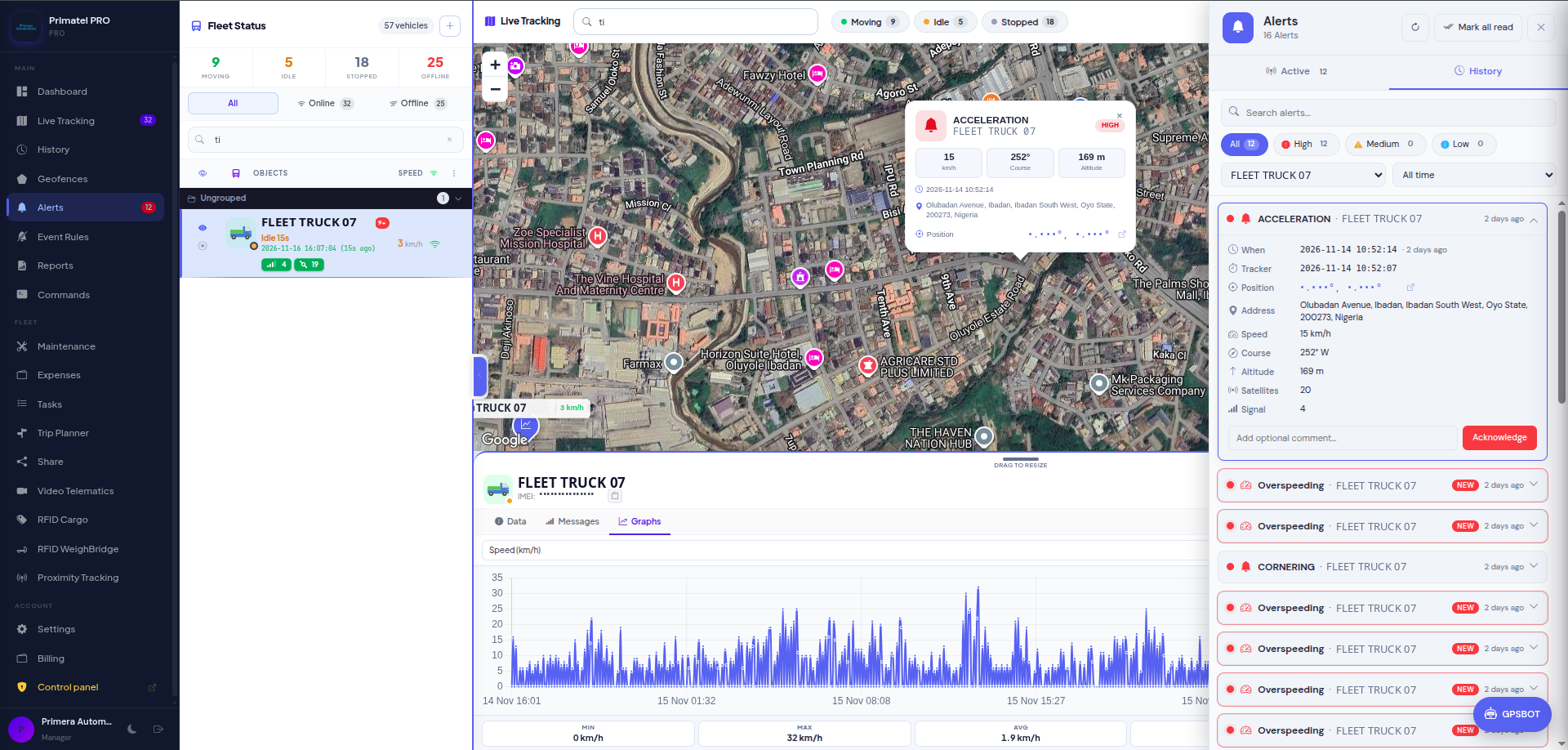
On the Primera Fleet platform, every driver has a scorecard that counts four behaviours: overspeeding, harsh braking, harsh acceleration and harsh cornering. Event rules send an instant alert to a supervisor when a vehicle breaks a rule you have set, so a speed rule written for city work can flag a van doing 65 km/h in town even though it is nowhere near its 90 km/h limiter setting.
For fleets that want to see as well as measure, Primera's AI dashcams add a road-facing camera with advanced driver assistance (ADAS: tailgating and collision alerts) and a cabin-facing driver monitoring system (DMS: distraction and fatigue). That matters in delivery work, where drivers glance at phones for addresses and customer calls. An FMCSA research summary reported that commercial drivers using a dispatching device while driving increased their risk of a safety-critical event by 9.9 times, and that texting drivers were 23.2 times more likely to be involved in one.
Does monitoring change behaviour? The evidence says yes, provided somebody acts on it. The same FMCSA summary describes a pilot test of an onboard driver behaviour monitoring system on 100 trucks at two carriers over 17 weeks. The combination of onboard safety monitoring and behavioural coaching was responsible for reducing safety-related events per 10,000 miles by 37 percent at one carrier and 52 percent at the other. The phrase that matters is "and behavioural coaching". Data alone did not do it.
Limiter and monitoring, side by side
These are not competing products. They solve different halves of the same problem.
| Speed limiter | Driver behaviour monitoring | Both together | |
|---|---|---|---|
| What it is | Hardware that physically caps top speed | Telematics (and optionally cameras) that record how the vehicle is driven | A hard ceiling plus visibility below it |
| Stops highway speeding | Yes, above the set speed | Flags it, but cannot physically prevent it | Yes |
| Catches 70 km/h in a 50 zone | No | Yes, against thresholds you set | Yes |
| Catches harsh acceleration, braking, cornering | No | Yes, event by event, with time and place | Yes |
| Sees distraction and fatigue | No | Yes, with a cabin-facing DMS camera | Yes |
| Tells you who, when and where | No | Yes | Yes |
| Needs a manager to act | No | Yes | Yes, for everything below the ceiling |
| Legal requirement in Nigeria | Yes, under FRSC policy | No | Compliance plus control |
Primera does not supply speed limiting devices; those come from FRSC-accredited vendors. What we supply is the visibility layer. If your vans already have limiters, monitoring tells you what is happening below them. If they do not, monitoring will also show you how often they are breaking the ceiling a limiter would impose, which is useful evidence when you budget for compliance.
A coaching routine that doesn't feel like policing
Monitoring fails when it becomes a fine machine. Drivers learn to resent it, and good drivers leave. It works when it is fair, specific and regular. A simple weekly routine:
- Set thresholds for city work, not the highway. Agree with your team what counts as overspeeding in town (for example, above 50 km/h in built-up areas) and make sure the harsh-event sensitivity suits a loaded van, not a sports car.
- Share the scorecard with drivers first. Before anyone is called in, let each driver see his own scores. Many improve on their own once they know someone is watching the numbers.
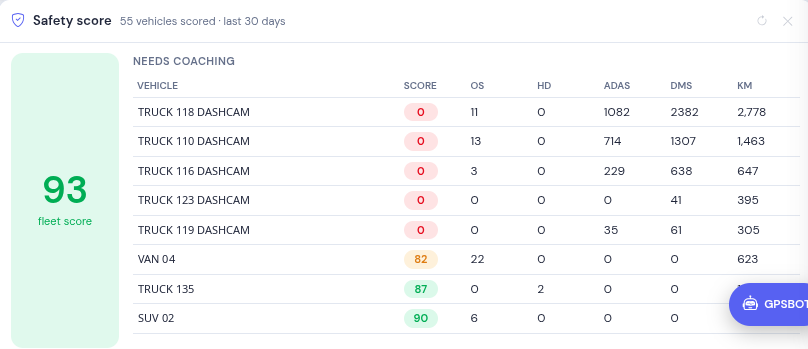
- Coach the worst three, every week. Use the safety score panel to pick the drivers who most need help. Ten minutes each, looking at specific events: this junction, this time, this speed.
- Ask before you tell. A harsh brake at the same spot every day may be a dangerous junction, not a careless driver. The driver usually knows.
- Link the data to the workshop. When a van comes in for a clutch or tyres early, pull its harsh-acceleration history. Make the connection visible to drivers, supervisors and finance.
- Recognise the good ones. Publish the top scores. A small monthly reward for the safest drivers costs less than one clutch.
What to do on Monday morning
- Check limiter compliance. List every commercial vehicle and whether it has a valid, FRSC-accredited speed limiting device. Fix the gaps; the fines and certificate suspension are not worth the risk.
- Pull last month's driver scorecards. Sort by harsh acceleration and harsh braking, not just overspeeding. In city fleets, the harsh events are usually where the story is.
- Set an urban overspeeding rule. Configure an alert for speeds above your town threshold, separate from any highway rule.
- Match three workshop invoices to three drivers. Take your last three early clutch or tyre replacements and look at those vans' event history. Bring the results to your next operations meeting.
- Book the first coaching sessions. Three drivers, ten minutes each, this week. Start with the data, end with an agreed change.
- Consider dashcams for your highest-risk routes. Talk to us about whether road- and cabin-facing cameras make sense for your operation; see our driver safety solutions.
A limiter keeps your vans off the wrong side of 90 km/h. What happens between 0 and 50 is still up to you.
About Primera Automations
Primera Automations helps Nigerian fleets measure and improve how their vehicles are driven, with driver scorecards for overspeeding, harsh braking, harsh acceleration and cornering, instant alerts, and AI dashcams with ADAS and driver monitoring. See our driver safety solutions, or talk to us about your fleet.
Sources
- Federal Road Safety Corps, Speed Limiting Device portal
- Federal Road Safety Corps, Speed Limiting Device FAQ
- Federal Road Safety Corps, Speed Limiting Device Implementation in Nigeria: The Journey So Far (2016, PDF)
- Radio Nigeria Lagos, FRSC Warns Commercial Drivers Resisting Speed Limiter Installation Nationwide (2025)
- Nairametrics, How speed violations led to over 18,000 road crashes in Nigeria in three years: NBS (2024)
- Africa Check via AllAfrica, Factsheet: Road safety in Nigeria in wake of high-profile crash (2026)
- ThisDay, FRSC Records 597 Road Crash Fatalities in One Month (2026)
- Michelin New Zealand, FAQ for cars
- Continental Tyres UK, Tyre mileage factors
- The AA, Car clutch problems
- US Department of Energy, fueleconomy.gov, Gas Mileage Tips: Driving More Efficiently
- Federal Motor Carrier Safety Administration, Office of Analysis, Research and Technology, FY 2009 Accomplishments Report (PDF)