Part three of a series. Previously: The problem with selling technology without support.
At 10:32 on a Tuesday morning, a fleet manager looks at his screen.
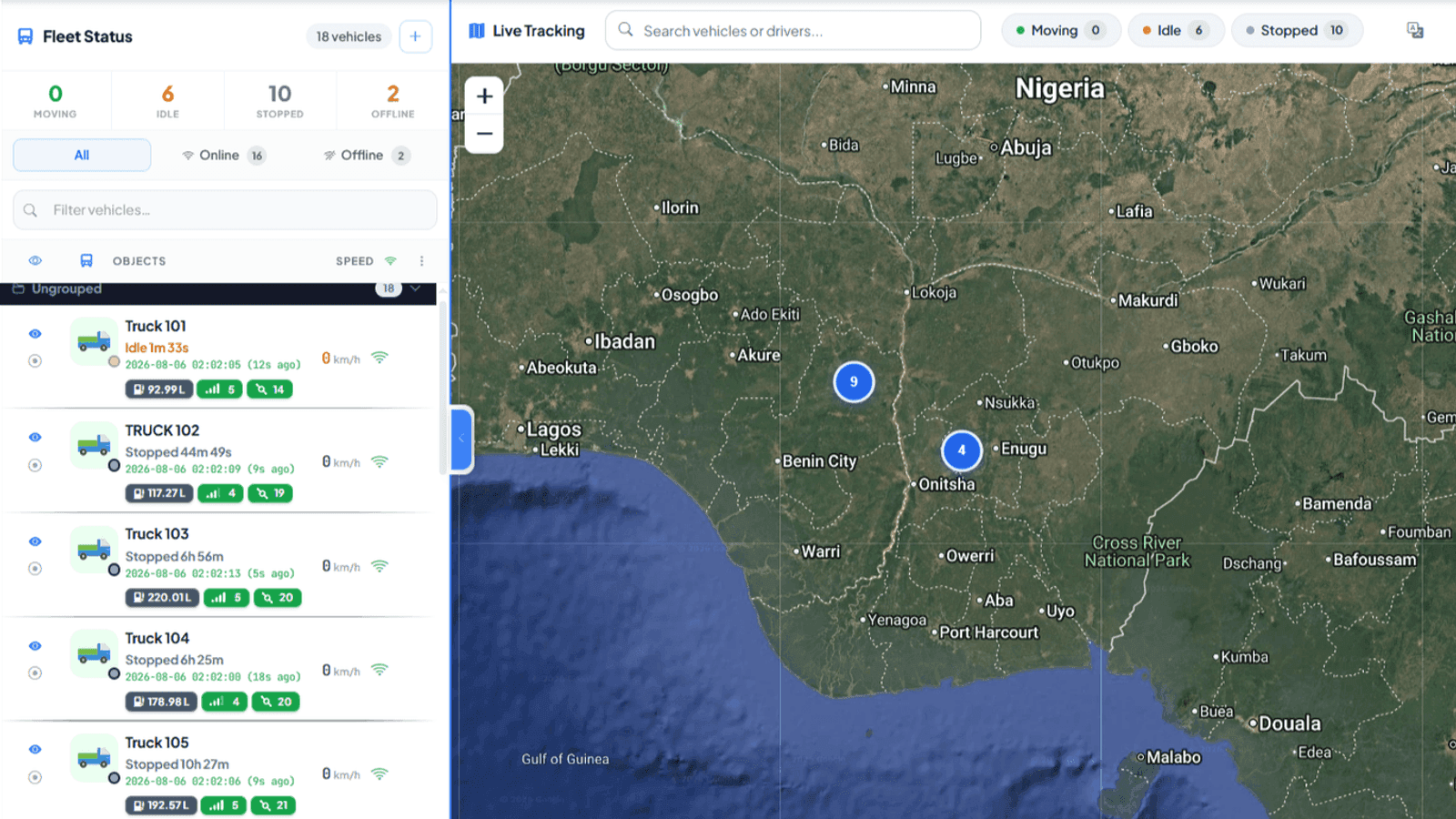
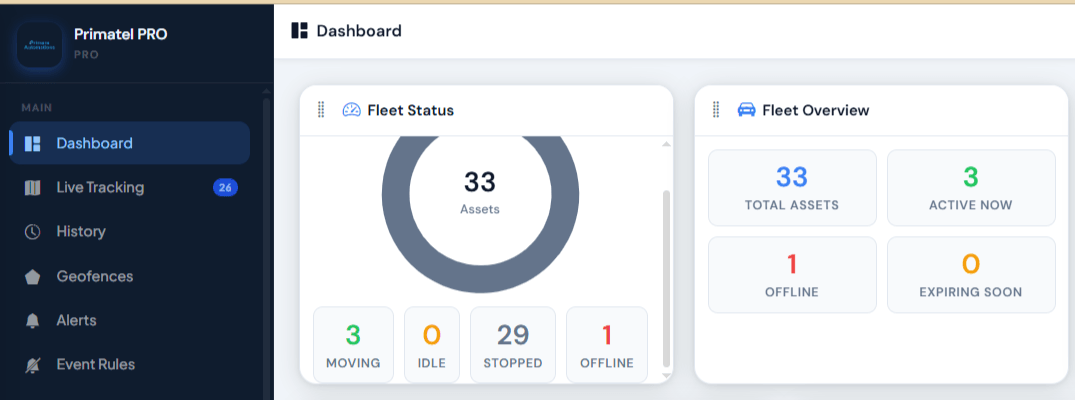
Every vehicle is accounted for. The trucks are moving. The dashboard is green. There are no major alerts.
For a moment, everything looks under control.
Then the finance department calls.
Fuel expenditure is up again.
The maintenance department has three trucks waiting for repairs.
Two vehicles have been sitting at a depot since yesterday.
A driver has spent six hours on a route that normally takes three.
And one of the company's most expensive trucks has been out of service for four days.
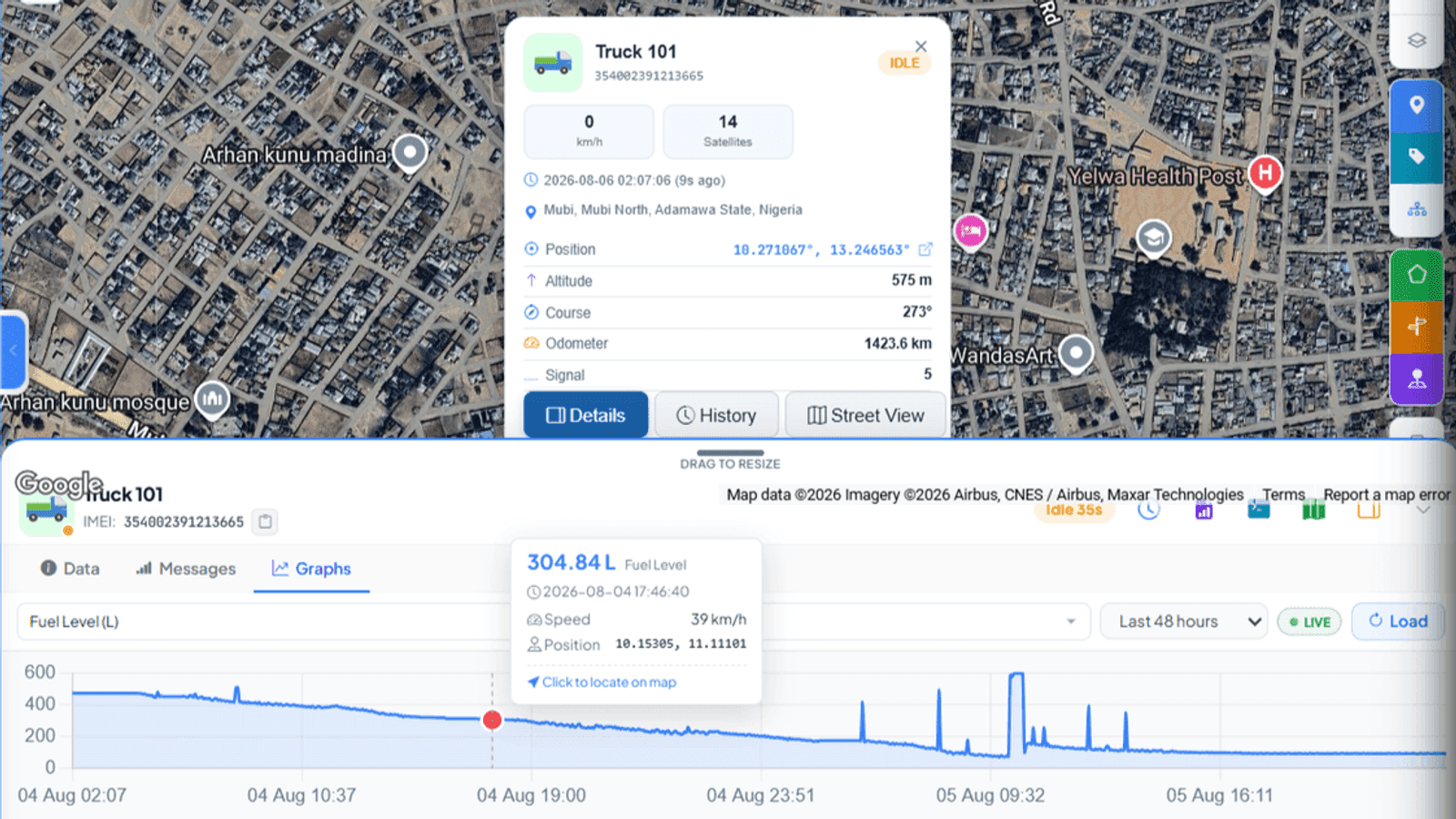
The tracker is working. The platform is working. The data is there.
So why is the business still losing money?
Because somewhere along the way, the industry confused visibility with management.
And they are not the same thing.
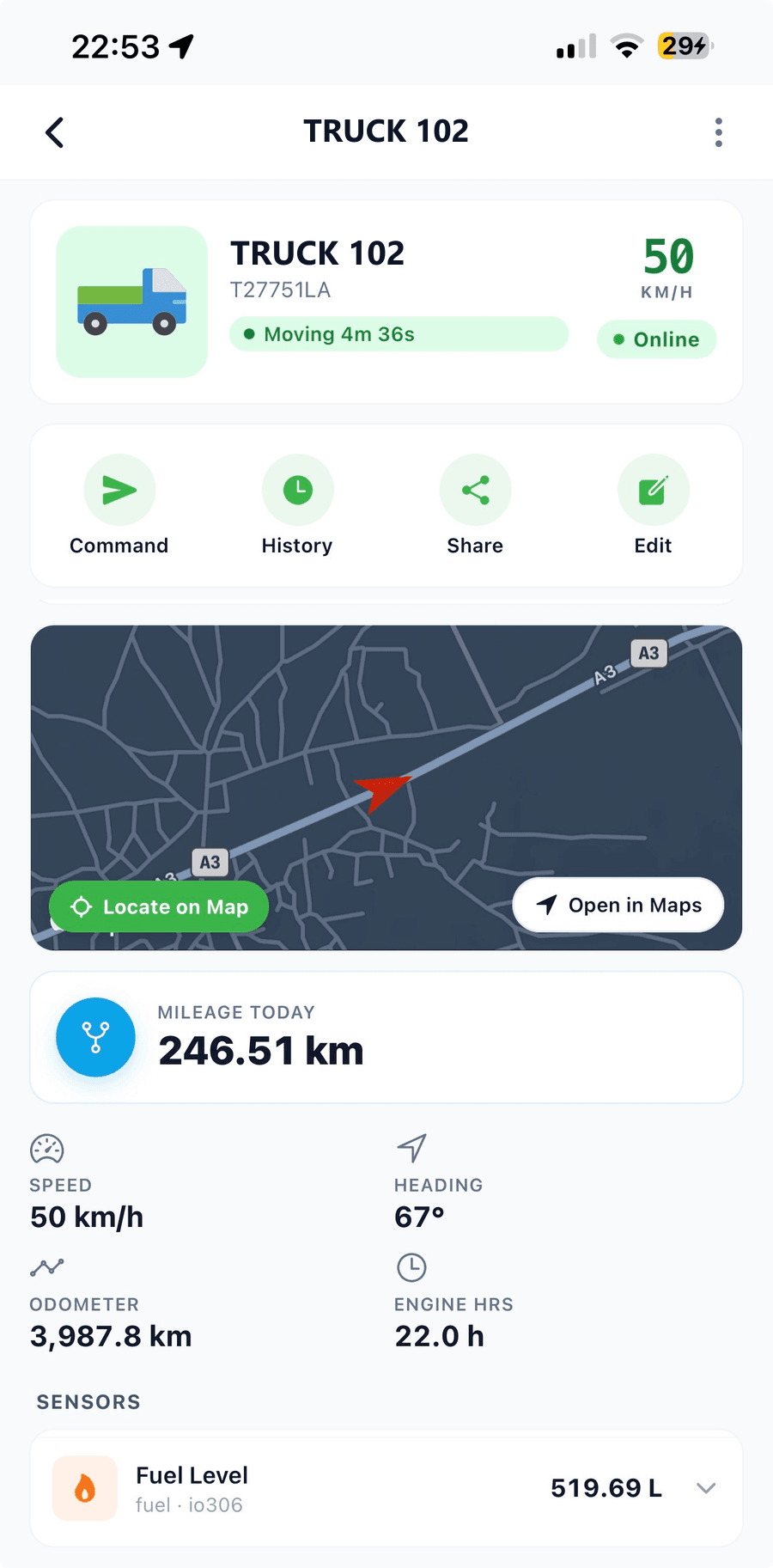
The GPS dashboard has become a comfort blanket
This is something the fleet industry doesn't talk about enough.
A live map feels like control.
You see your truck. You see its speed. You see its route. You can open its history. You can create a geofence. You can receive an alert.
It feels sophisticated.
But ask a more difficult question:
What changed because you knew all of that?
If the answer is "nothing," then the technology has become a very expensive observation tool.
The truck is still consuming fuel. The driver is still making decisions. The vehicle is still depreciating. Maintenance is still being delayed. Downtime is still costing money.
The map is simply showing you all of it.
That's not useless. But it isn't management.
The hard question fleet owners should ask
Don't ask:
"Can I track my vehicles?"
Almost everybody can answer yes.
Ask:
"What will I be able to manage better because I installed this system?"
That's a much harder question.
Will you reduce fuel losses? Will you reduce unnecessary idling? Will you identify vehicles that are becoming maintenance liabilities? Will you improve driver behaviour? Will you reduce unauthorised trips? Will you increase vehicle utilisation? Will you reduce downtime? Will you recover stolen assets faster? Will you make better replacement decisions?
If the supplier cannot explain how the technology connects to those outcomes, you're probably buying tracking, not fleet management.
Here's where things get uncomfortable
Imagine you operate 100 trucks. You install GPS tracking on all 100.
Six months later, you ask:
"How much money did GPS tracking save us?"
And nobody can answer.
That's a problem.
Because installing technology isn't an achievement by itself.
The business didn't invest in trackers because it wanted more dots on a screen. It invested because it expected an outcome. Maybe lower fuel costs. Maybe better security. Maybe less downtime. Maybe better driver accountability. Maybe improved utilisation. Maybe all of them.
If those outcomes aren't being measured, how does management know whether the investment worked?
The fleet industry has a measurement problem
Many businesses measure the activity of their fleet. They know how many vehicles they own, how many kilometres those vehicles travel, how many trips they make, how much fuel they purchase, and how many trackers they have installed.
Far fewer consistently measure the economics of individual vehicles.
That's a very different exercise. Consider this:
| Truck A | Truck B | |
|---|---|---|
| Distance | 25,000 km | 21,000 km |
| Fuel | ₦4.2 million | ₦3.1 million |
| Maintenance | ₦1.1 million | ₦600,000 |
| Downtime | 18 days | 3 days |
Which one is performing better?
It isn't immediately obvious.
Truck A travelled further. Truck B cost less. But perhaps Truck A generated significantly more revenue. Or perhaps it didn't.
Distance isn't profitability.
And that's one of the biggest weaknesses of looking at fleet data without putting it into a business context.
The most important number may not be on your dashboard
GPS platforms are very good at telling you where things are. Your accounting system is very good at telling you what you spent. Your maintenance records tell you what you repaired. Your fuel records tell you what you bought.
But your business needs to understand how these things connect. For example:
Vehicle 27
- travelled 12,000 km
- consumed ₦2.4 million in fuel
- spent 14 days in workshops
- had three tyre replacements
- experienced repeated harsh driving events
- generated less revenue than comparable vehicles
Now you have something interesting.
The problem may not be the tracker. The problem may be the vehicle's economics.
And that's a fleet-management conversation.
The vehicle that is "busy" may be your worst performer
A vehicle that is constantly moving can look productive. It isn't necessarily.
Imagine two trucks. Truck A travels 8,000 km every month. Truck B travels 5,500 km.
You might assume Truck A is the better asset.
But Truck A spends enormous amounts of time idling, consumes more fuel, has frequent breakdowns and spends significant time travelling empty. Truck B carries higher-value loads, has better utilisation and spends less time waiting.
Which truck is performing better?
You can't answer that with GPS alone. You need operational context.
Empty miles are still miles
One of the easiest things to miss in fleet management is the journey that generates no revenue.
A truck travels 300 km carrying a load. Good.
It returns 300 km empty.
Now the company has paid for fuel, tyres, driver time, vehicle depreciation, maintenance and road exposure, for another 300 kilometres.
The tracker can show you exactly where that truck went.
But the real business question is: could that return journey have generated revenue?
That's no longer a GPS question. That's a fleet optimisation question.
Downtime is more dangerous than most companies calculate
Suppose a truck makes ₦300,000 in gross revenue on an average productive day.
It breaks down. It stays in the workshop for five days.
The company may record one number:
Repair cost: ₦400,000.
But the actual economic impact could be much larger. There may also be lost revenue, delayed deliveries, customer dissatisfaction, replacement vehicle costs, driver costs, rescheduling, additional fuel and emergency repairs.
The invoice from the mechanic captures only one part of the damage.
Downtime is an economic event. Fleet management should treat it that way.
And this is where maintenance becomes more interesting
Most companies think about maintenance reactively. The truck breaks. Fix the truck.
But a fleet-management system should allow the business to start asking: why does this truck keep breaking?
Perhaps the vehicle has a recurring issue. Perhaps it is being driven aggressively. Perhaps it is being overloaded. Perhaps maintenance intervals are being missed. Perhaps the vehicle is simply reaching the point where replacement makes more financial sense.
That last question is particularly important.
Because sometimes the most expensive maintenance decision is continuing to maintain the wrong vehicle.
Technology can expose bad management
This is something fleet owners should be prepared for.
A good system may reveal uncomfortable things. It may show that a trusted driver regularly deviates from routes. That a supposedly busy vehicle spends most of its time idle. That fuel consumption varies dramatically between similar vehicles. That maintenance costs are concentrated around particular vehicles. That vehicles are being underutilised. That managers are approving unnecessary trips. That certain routes are consistently inefficient. That some assets generate very little return.
The technology isn't creating these problems.
It is exposing them.
And that can be uncomfortable. But that's also where the value begins.
Don't blame the driver for everything
Here I want to challenge the usual industry narrative.
When fuel consumption is high, some companies immediately blame the driver. When a vehicle is delayed, they blame the driver. When fuel disappears, they blame the driver.
Sometimes the driver is responsible.
But sometimes management created the conditions. Poor route planning. Long waiting times. Bad loading procedures. Unrealistic delivery schedules. Poor vehicle maintenance. Inadequate training. Broken incentive structures.
A sophisticated fleet-management system should help determine what actually happened, rather than simply providing another reason to blame someone.
That's a much more mature approach to accountability.
The same technology can be used badly
This is perhaps the most important distinction.
A fleet-management system can be used to control people. Or it can be used to improve operations.
Those are not the same thing.
If management calls a driver every time the vehicle exceeds a speed threshold by 2 km/h, the system becomes oppressive.
If management identifies a consistent pattern of dangerous driving and uses that information for coaching, training and accountability, the system becomes useful.
The difference isn't the technology. It's the management philosophy behind it.
More alerts can actually make your fleet less managed
This sounds contradictory. It isn't.
Imagine receiving 1,000 alerts every day. Speeding. Idling. Geofence exits. Ignition events. Low battery. Offline devices. Harsh braking. Harsh acceleration.
If everything is urgent, nothing is urgent.
Eventually, people stop paying attention.
A good system should answer a narrower question: which alerts actually matter?
That requires proper configuration. The objective isn't to make the platform as noisy as possible. It's to make it useful enough that management knows where to look.
The best systems don't just tell you what happened
They help you identify what deserves attention. That's the evolution:
| Level | Question it answers |
|---|---|
| 1. Location | Where is the vehicle? |
| 2. Monitoring | What is the vehicle doing? |
| 3. Diagnosis | Why is this happening? |
| 4. Management | What should we do about it? |
| 5. Optimisation | How do we prevent it from happening again? |
Most basic GPS deployments stop around Level 1 or 2.
The real value starts appearing at Levels 3, 4 and 5.
This is why hardware still matters
None of this means hardware is irrelevant. Quite the opposite.
If you want useful information, you need equipment capable of collecting useful information.
A basic tracker may provide location and speed. A more advanced telematics device can provide much more. Professional devices such as Teltonika's FMC650 support CAN/J1939, J1708, RS232 and RS485 interfaces, allowing integration with vehicle systems and other equipment.
That can matter enormously for heavy-duty fleets.
Because sometimes the question isn't "where is the truck?"
It's "what is the truck telling us about itself?"
We covered the hardware side of this in The GPS tracker trap.
But even the best hardware cannot manage a fleet
This is where the industry needs to be honest.
You can install premium hardware. You can have an excellent server. You can build a beautiful application. You can collect enormous amounts of data.
And still have a badly managed fleet.
Because ultimately:
Technology doesn't make decisions. People do.
The job of the technology is to make those decisions better informed.
So what should a fleet owner actually measure?
Not just locations. At a minimum, management should be looking at:
Vehicle utilisation. How much is each asset actually being used?
Fuel efficiency. How much fuel is being consumed relative to work performed?
Downtime. How much productive time is being lost?
Maintenance cost. Which vehicles are becoming expensive to keep?
Driver behaviour. Which behaviours are increasing operational risk and cost?
Route efficiency. Are vehicles travelling unnecessarily?
Idle time. How much fuel is being consumed while the vehicle isn't productive?
Asset productivity. What does each vehicle contribute to the business?
These measurements start turning a fleet from a collection of vehicles into a managed financial operation.
What Primera believes
This is ultimately why Primera Automations doesn't see GPS installation as the end product.
The tracker is a sensor. The platform is a tool. The data is evidence. Management is the objective.
For one customer, that might mean basic GPS tracking. For another, it may require fuel monitoring. For a heavy-duty operation, it might involve CAN/J1939 data. For a high-value fleet, it could involve dash cameras, driver behaviour monitoring and stronger security controls.
The right solution depends on what the business is actually trying to control.
And once the system is deployed, the conversation shouldn't end with:
"Your vehicle is now visible."
It should continue with:
"Here's what we're seeing. Here's what it means. Here's where you're losing money. And here's what we can do about it."
That's the difference.
Your tracker may be working. Your fleet may not be.
That is the uncomfortable conclusion.
A functioning GPS tracker does not automatically create efficiency. A beautiful dashboard doesn't guarantee accountability. More data doesn't automatically create better decisions. And installing technology doesn't automatically change behaviour.
The value appears when the information becomes action.
When abnormal fuel consumption is investigated. When unnecessary idling is reduced. When maintenance becomes proactive. When downtime is measured. When poor utilisation is identified. When drivers are treated fairly but held accountable.
When management can finally answer: "where is the money going?"
That's when GPS tracking stops being a gadget.
That's when it becomes fleet management.
And that is ultimately what businesses should be paying for.
Not a green dot.
Control.
Read next: Your fleet has 50 trucks. How many are actually making you money?, part four, on the economics hiding behind an operational fleet.
The series so far: Why installing 500 trackers doesn't mean you have a fleet management system, The problem with selling technology without support
If you want to know what your own fleet data is actually saying, ask us to look at it, or see how Primera Fleet works.
Sources & further reading
- Federal Road Safety Corps, Road Transport Safety Standardization Scheme (RTSSS)
- Federal Road Safety Corps, vehicle maintenance requirements for fleet operators (PDF)
- Nigerian Communications Commission, Type Approval
- Teltonika, FMC650 technical documentation
- Teltonika, FMC920 technical documentation