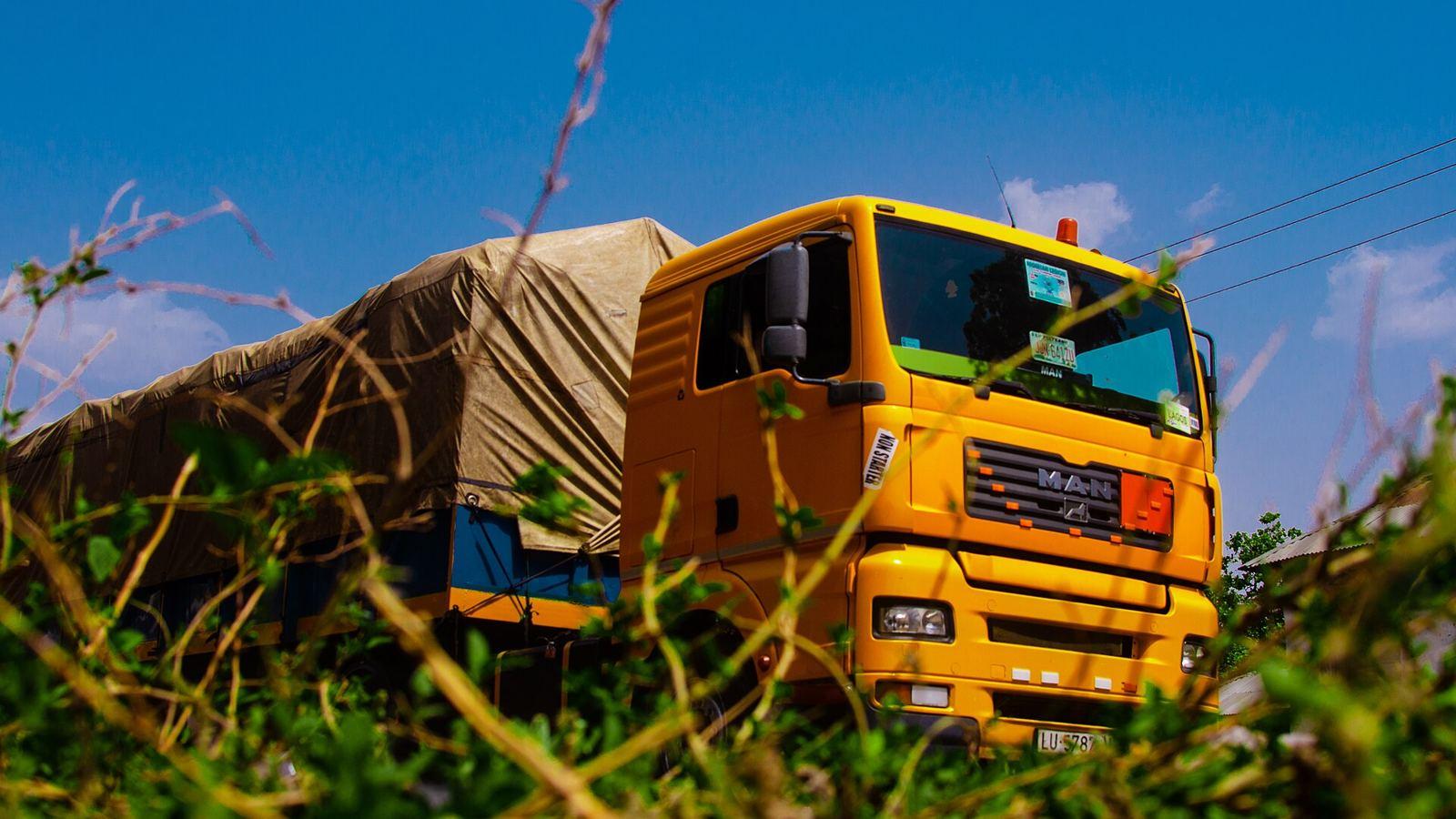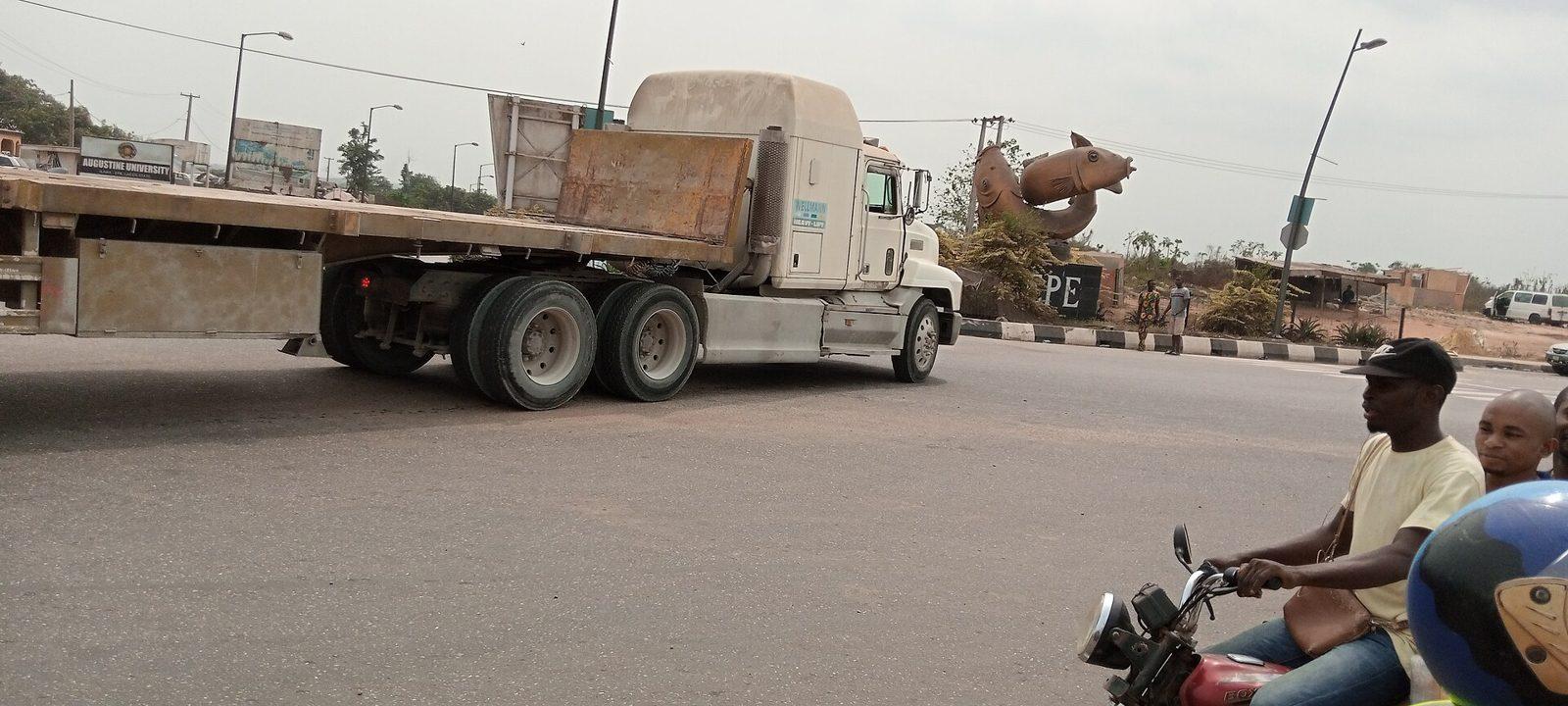
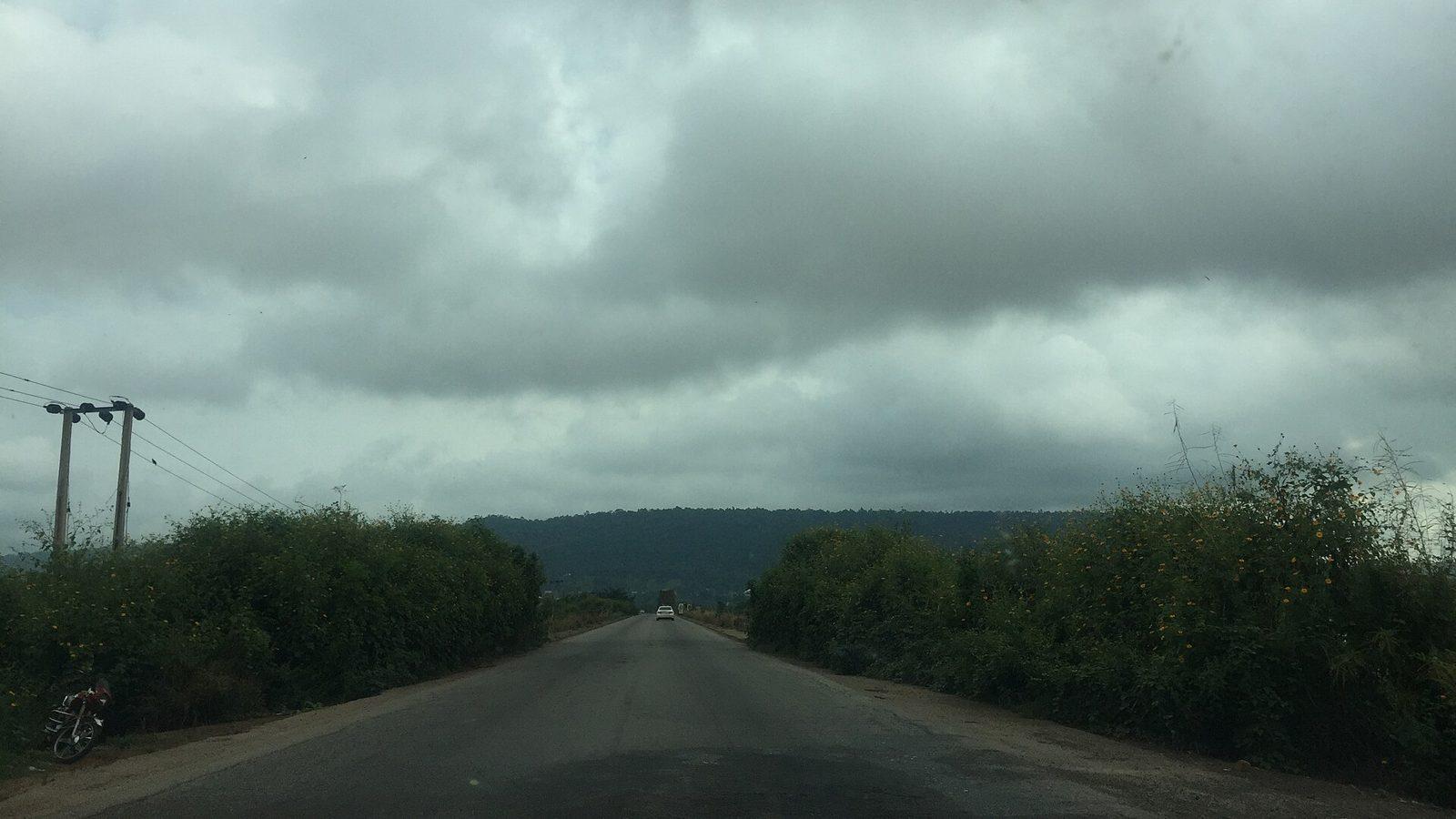
It is a few minutes to midnight. A truck loaded with a customer's goods was due to park for the night at a filling station two hours ago. Instead, the dot on the map is still moving, at a steady 60 km/h, on a road that is not on the trip plan. The driver's phone rings out. Somewhere in the transport office, nobody is looking at the screen, because nobody is in the transport office.
That scene is a composite, but the pattern behind it is not invented. In August 2026, Oyo State police arrested four suspected members of a syndicate on the Lagos–Ibadan Expressway. According to Peoples Gazette, a motor boy confessed to masterminding the hijack of his own master's truck, which was diverted towards the Ogbomoso–Ilorin axis for sale to a receiver. One member of the gang, police said, specialised in removing the trackers and electronic devices that owners rely on to find stolen trucks.
Read that again, because it captures modern cargo theft in miniature: it often starts inside the cab, and the thieves already know about your tracker. Add darkness, empty roads and a sleeping office, and the odds tilt further their way. For a Nigerian operator carrying fuel, cement, beverages, electronics or anything else worth a syndicate's trouble, the question is no longer whether to control night movement. It is how to do it so that the controls hold when nobody is watching.
The union already wrote the rule
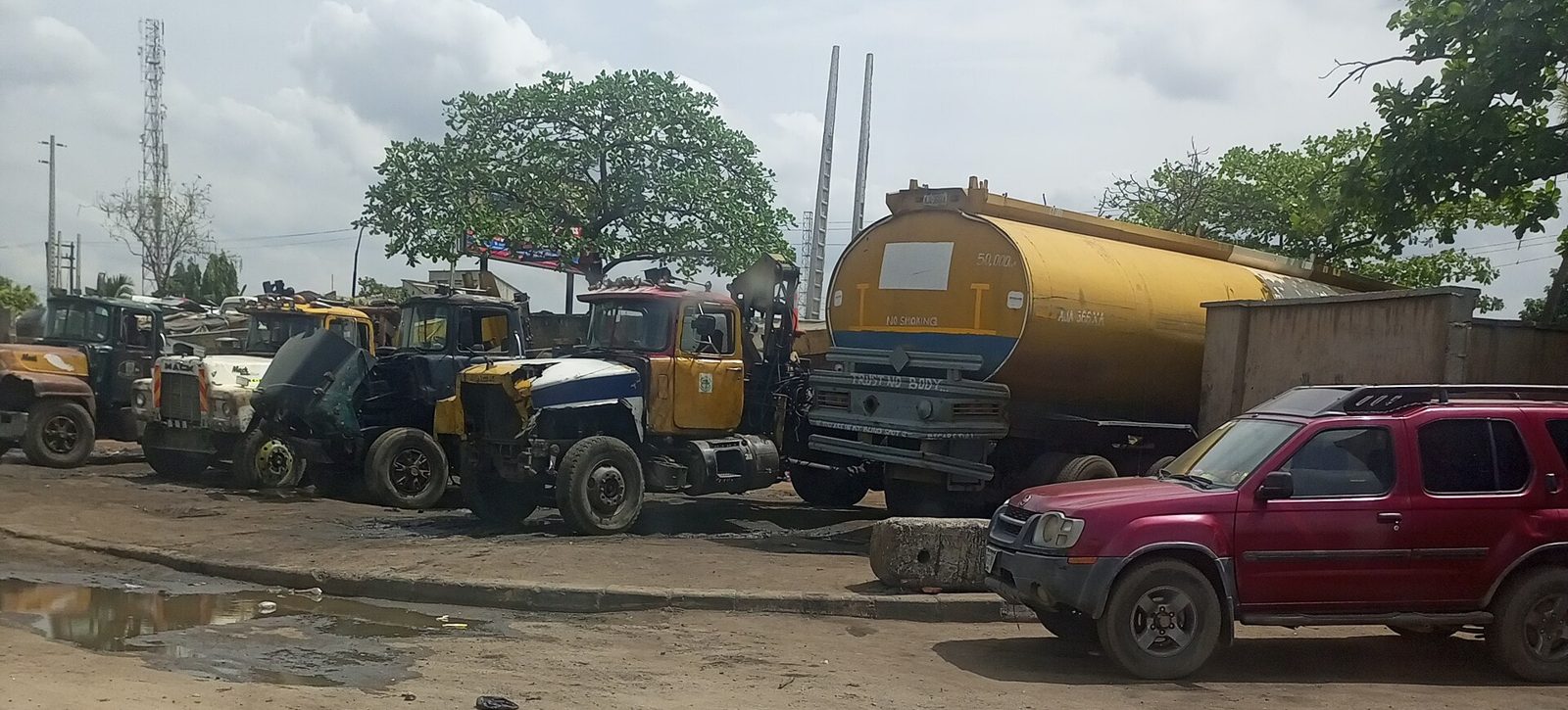
The people who drive tankers for a living have been saying this for years. In 2017 the Petroleum Tanker Drivers branch of NUPENG restated its "zero tolerance for night transportation of petroleum products", warning that robbers use the darkness to hijack loaded tankers. Its spokesman's advice was simple: "If you load in the night, you have to wait till the day break before you move your tanker out" (Shipping Position).
In May 2025, at the launch of a tanker-safety campaign led by the petroleum regulator NMDPRA with the FRSC, police, army and others, the PTD's Lagos zonal chairman went further: "Any driver caught driving after 6:00 p.m. will be sanctioned" (News Agency of Nigeria). And in April 2026 the union's newly elected tanker-drivers' chairman warned members that the risks of night travel were rising, listing "hijacking of truck, kidnapping for ransom, killing for rituals" among the crimes that happen after dark (Leadership).
The FRSC has said the same thing in its own language. In a 2019 presentation to the tanker drivers' union, the Corps Marshal listed the "burning issues" in tanker safety. "Night travelling" was on the list. So was "non-proper tracking of fleet" (FRSC).
A curfew that lives only in a union circular is a suggestion. A curfew that sets off an alert on a manager's phone is a policy.
What actually changes after dark
Night is dangerous for three overlapping reasons, and it helps to separate them, because each needs a different control.
The first is crime. "The night under the darkness is usually attractive to criminals to operate and carry out their wicked act," an FRSC sector commander in Ogun told motorists, advising them to minimise night journeys (Freedom Online). ThisDay's editorial board has argued that over 80% of the checkpoints that operate on the highways by day disappear by nightfall (ThisDay). Whether or not that figure holds on every corridor, the experience of drivers matches it: help is further away at 1 a.m.
The second is crash risk. Darkness, glare, unlit broken-down trucks and fatigue all compound. Nigerian crash data is not broken down by hour in a way that allows a clean comparison, but international data gives a sense of scale. In the United States, the road safety regulator NHTSA estimated that only about a quarter of travel happens at night, yet the fatality rate per vehicle mile is about three times higher at night than during the day for passenger vehicle occupants.
The third is the one managers prefer not to think about: the unauthorised run. A truck that should be parked starts moving at 11 p.m. Sometimes it is a driver doing a private job on your diesel. Sometimes it is a driver who has been paid to deliver the load somewhere else. In April 2025, a police patrol intercepted a trailer at Garima Junction in Bosso carrying 900 bags of cement that had been loaded at Obajana for Maiduguri and diverted to be sold illegally. The arrested motor boy said he and the driver "conspired with one other and removed the truck" (Sahara Reporters). In Lagos in June 2025, police found a hijacked tanker that had been carrying 45,000 litres of petrol standing empty in Orile, and traced the stolen product to a filling station in Ejigbo (Premium Times).
The Lagos paradox
Before you write "no movement after 6 p.m." into every driver's contract, look at the map. Not every authority wants your trucks off the road at night. In January 2021, Lagos State announced it would restrict the movement of trucks and trailers to the hours of 9 p.m. to 6 a.m. as part of a policy to curb road crashes, a plan the FRSC's Lagos sector command publicly backed (Peoples Gazette).
So the right rule is not a single curfew. It is a set of rules attached to places. A truck may be required to move at night inside Lagos, should be parked in a known, guarded location by early evening on the Lokoja or Benin corridors, and should never stop at all on a stretch your drivers know to be dangerous. That is precisely the problem geofencing was built to solve.
Drawing the corridor
A geofence is a boundary you draw on a map. When a tracked vehicle enters or leaves it, the platform records the event and, if you ask it to, sends an alert. Many fleets stop at one or two, around the depot and perhaps the main customer. For high-value cargo, you need a small family of them, each with its own rule.
| Zone | What you draw | Rule | Alert when |
|---|---|---|---|
| Corridor | A buffer along the approved route, wide enough for normal lane changes and fuel stops | Truck must stay inside it for the whole trip | It exits the corridor |
| Night-stay zone | Vetted, guarded parks or depots along the route, agreed before departure | Truck must be inside one by the curfew hour | It moves out before dawn |
| Red zone | Known hotspots, bad stretches, informal parks you have banned | No stopping, or no entry at all | It enters, or stops inside for more than a few minutes |
| Origin and destination | The loading depot and the receiving gate | Doors may open only here | The cargo lock opens anywhere else |
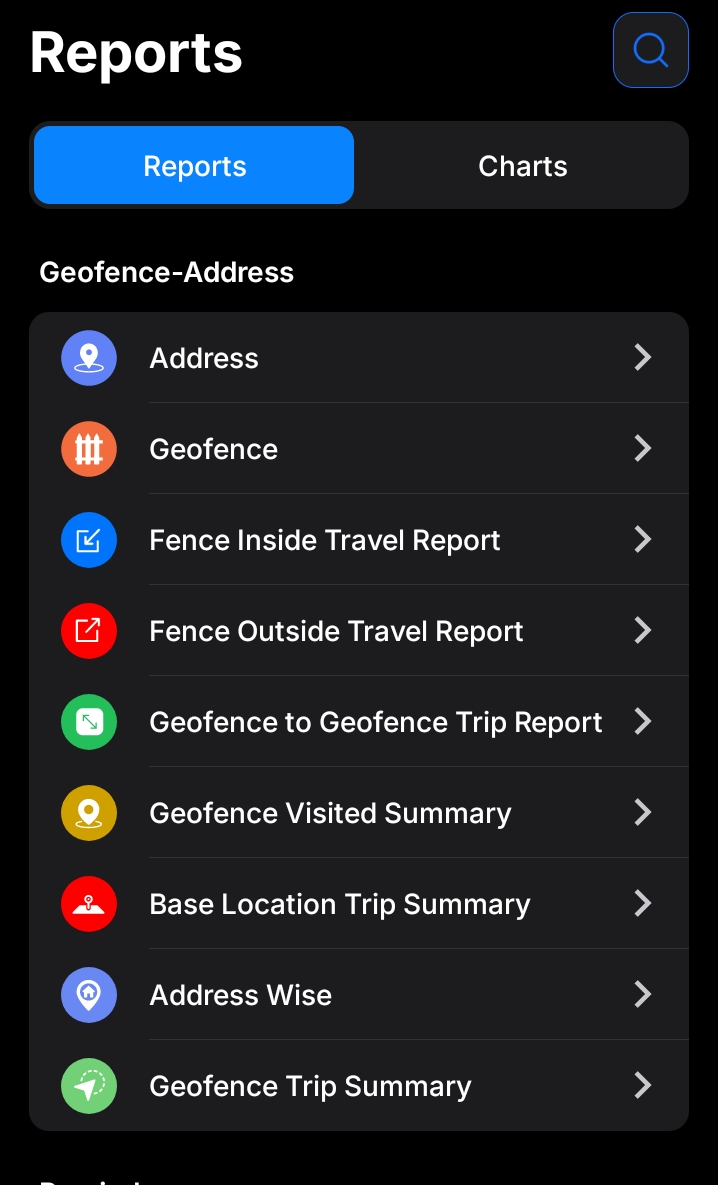
On Primera Fleet, each of these is a geofence with an event rule behind it, and the reports show geofence visits, travel inside and outside each fence, and trips from one geofence to another. The stoppages report shows, after the fact, every place a truck stopped and for how long. In real time, you get the alert.
Two practical tips. First, draw the corridor generously. A corridor so tight that every detour around a pothole triggers an alarm will be ignored within a week, and an ignored alert is worse than none. Second, name every night-stay zone in the plain words your drivers use for the place, not "Zone 4", and get the driver to confirm the night's stop before he leaves the depot. A geofence agreed with the driver gets respected. One imposed in silence gets argued with.
Making the curfew real
The night-stay zone works only if something happens when a truck is outside one after hours. That is the job of an event rule. On the Primera Fleet platform, you decide what counts as an event, and the platform watches for it. For night control, three rules built from geofences and hours do most of the work:
- After-hours movement. Any ignition-on or movement between your curfew and dawn raises an alert, unless the truck is inside a zone where night movement is required, such as the Lagos approaches.
- Night-stay exit. Any truck that leaves an approved night-stay zone before dawn raises an alert. At curfew, a glance at the live map shows which trucks are not yet inside one.
- Corridor exit. Any exit from the approved route corridor at any hour raises an alert, marked high priority after dark.
Then decide who receives each alert and what they do. An alert at 11:40 p.m. that lands on a phone set to silent is decoration. Name an on-call manager for each night, and make sure he has the driver's number, the escort's number if you use one, and the number of the nearest police division on the route. When a customer asks where their goods are, you can share a live location link with them for that trip, rather than relaying second-hand phone calls.
When the trailer door matters more than the cab
A load does not have to vanish with the truck. It can leave from the back of it, at an unscheduled stop, a few bags or a few thousand litres at a time, while the truck itself arrives on schedule. That is why the cargo needs its own control.
An electronic cargo lock fitted to the trailer doors or container replaces the old seal-and-pray approach. Primera's e-lock cargo security uses remote, geofence-triggered locking, so the doors are meant to open only at the loading depot and the destination gate, and it sends an instant alert if the lock is tampered with or opened off-route. Every locking, opening and violation is logged, so the dispute at the receiving end becomes a matter of record rather than of who shouts loudest.
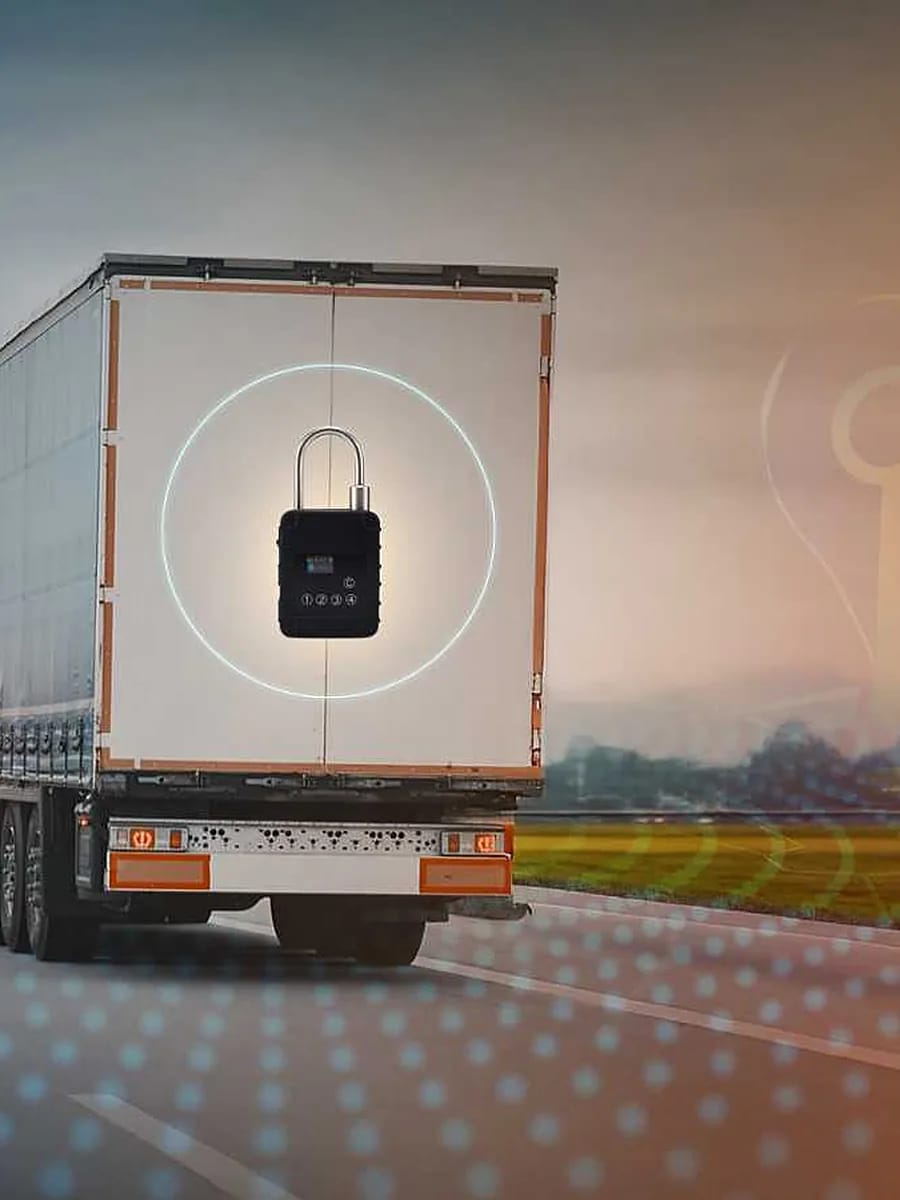
The e-lock also blunts the insider threat that runs through the diversion cases above. A driver who has been paid to deliver a load somewhere else can drive the truck, but he cannot easily open the doors at the receiver's warehouse without generating an alert that names the time and the place.
The engine cut-off: a last resort, used safely
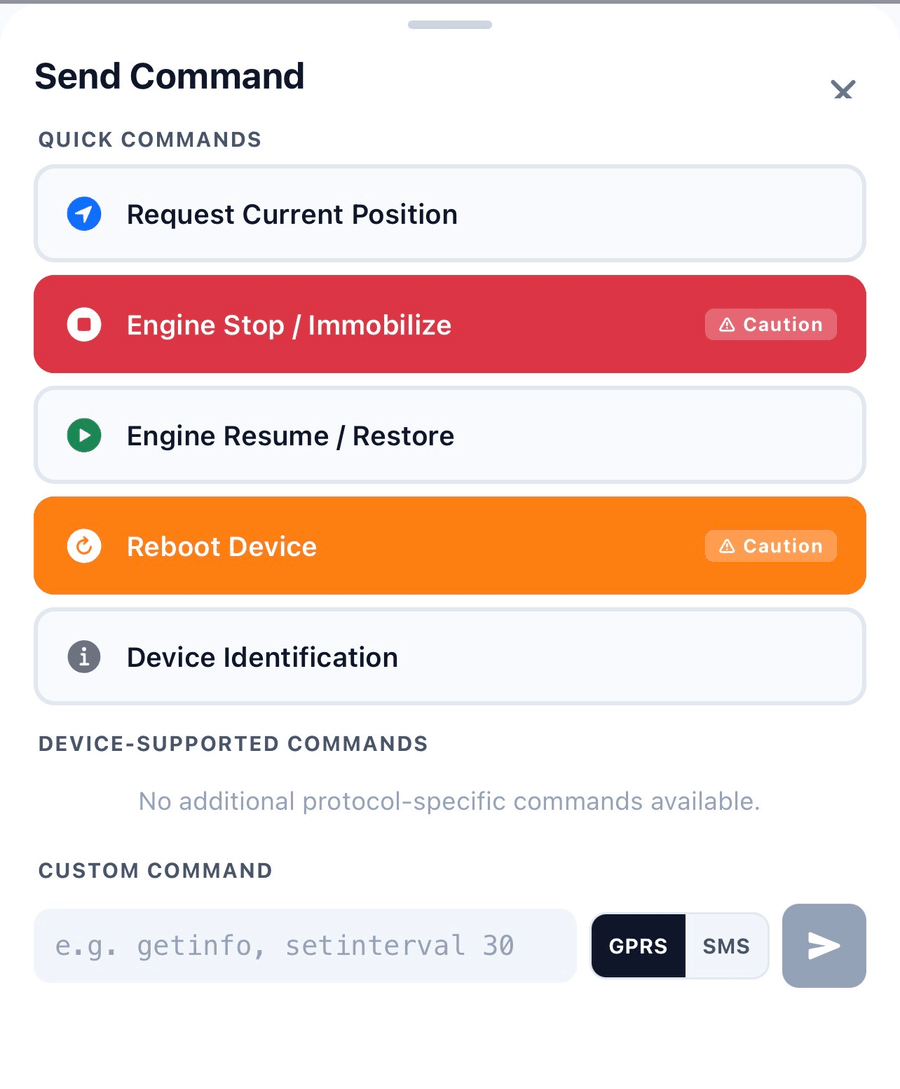
Remote immobilisation is the most powerful tool in the kit, and the most dangerous if misused. Primera Fleet can cut a vehicle's engine remotely, and the platform marks the command with a caution for good reason.
The rule is absolute: never cut the engine of a moving truck. A loaded articulated vehicle that loses power on an expressway, at night, in traffic, is a crash waiting to happen, and the people most likely to die are your driver and the motorists behind him. Immobilisation is for preventing a parked or stopped vehicle from moving again, not for stopping one that is already moving.
A sensible protocol runs like this:
- Confirm. Check the live location, the trip history and the alerts. Is this a real diversion, or a driver avoiding a flooded road?
- Call. Try the driver, then the escort or motor boy. A driver under duress may not be able to talk freely, so agree a code phrase in advance.
- Alert the authorities. Report to the police with the live location and the vehicle details. A moving dot on a map is far more useful to them than a description.
- Wait for the truck to stop. Once it is stationary, immobilise it so it cannot be restarted and driven away.
- Record everything. Keep the alerts, the trace and the times. They are your evidence for the police, the insurer and the customer.
Finally, plan for the thief who knows about trackers, because the Lagos–Ibadan syndicate clearly did. Whatever system you buy, insist on a concealed installation, a backup battery that keeps the unit reporting if the main power is cut, and an alert the moment power is lost or the device goes offline. A tracker that goes quiet at 1 a.m. is itself an alarm, if somebody is set up to hear it.
What to do on Monday morning
- List your night exposure. Pull last month's trip history and mark every trip with movement between 7 p.m. and 6 a.m. Note which were planned and which were not.
- Pick your night-stay zones. For each regular corridor, choose two or three vetted, guarded stopping points and draw them as geofences.
- Draw the corridors. Start with your highest-value route. Draw a generous corridor, a red zone for each known hotspot, and fences at origin and destination.
- Write the curfew by place, not by clock alone. Respect city rules that require night movement, such as Lagos, and enforce early parking everywhere else.
- Switch on three event rules. After-hours movement, night-stay exit and corridor exit. Name the person who receives each alert, every night of the week.
- Agree the cut-off protocol in writing. Who may authorise it, when, and the non-negotiable rule that it is never used on a moving vehicle.
- Put the cargo under its own lock. For the loads that would hurt most to lose, fit e-locks tied to the origin and destination geofences.
- Brief your drivers. Explain the zones and the rules, and why they exist. The drivers' own union has been asking for this protection for years.
The night will always belong to somebody. Make sure that, on your trucks, it belongs to you.
About Primera Automations
Primera Automations helps Nigerian haulage operators keep control of trucks and cargo across long corridors. The Primera Fleet platform combines live tracking, geofences, event rules and instant alerts with safe remote immobilisation, and our fleet solutions add e-lock cargo security, fuel sensors and AI dashcams for the loads that matter most.
Sources
- Peoples Gazette, Four suspected truck hijackers nabbed on Lagos-Ibadan Expressway
- Shipping Position, Tanker Drivers Decry Night Transportation Of Petroleum Products
- News Agency of Nigeria, NMDPRA launches campaign to curb tanker accidents
- Leadership, Ote emerges petroleum tanker drivers chairman, warns against night trips
- Federal Road Safety Corps, Meeting with the leadership of NUPENG-PTD (2019) (PDF)
- Freedom Online, Minimise night journey, FRSC advises motorists
- ThisDay, The danger of night travels
- NHTSA, Characteristics of Unrestrained Passenger Vehicle Occupant Fatalities by Time of Day (DOT HS 810 948) (PDF)
- Sahara Reporters, Nigerian Police Arrest Suspect For Diverting 900 Bags Of Cement En Route Borno State
- Premium Times, Police arrest seven suspects linked to tanker hijack in Lagos
- Ships & Ports, Lagos restricts truck movements to night
- Peoples Gazette, Crashes: FRSC backs Lagos restrictions of trucks, trailers