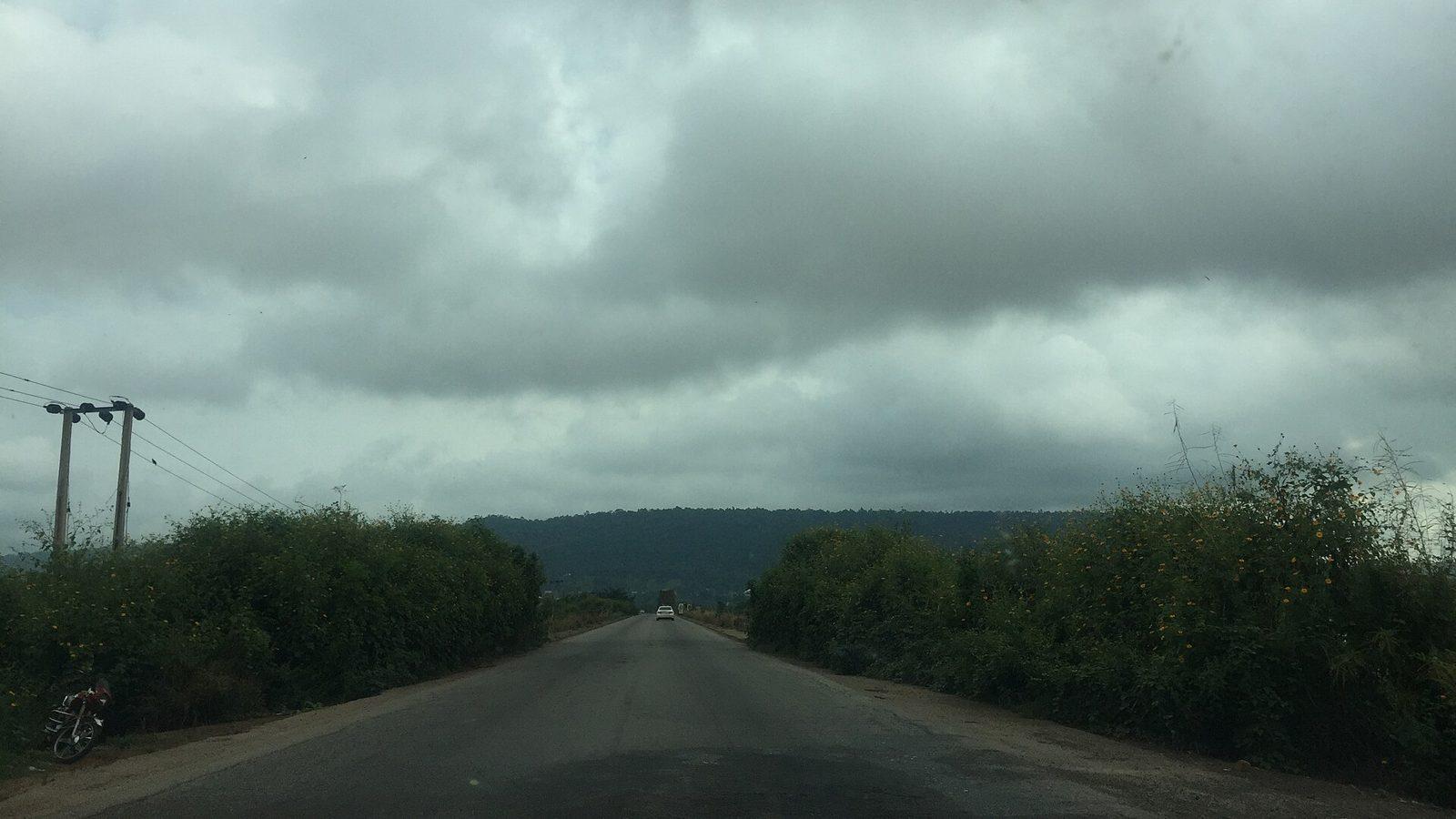
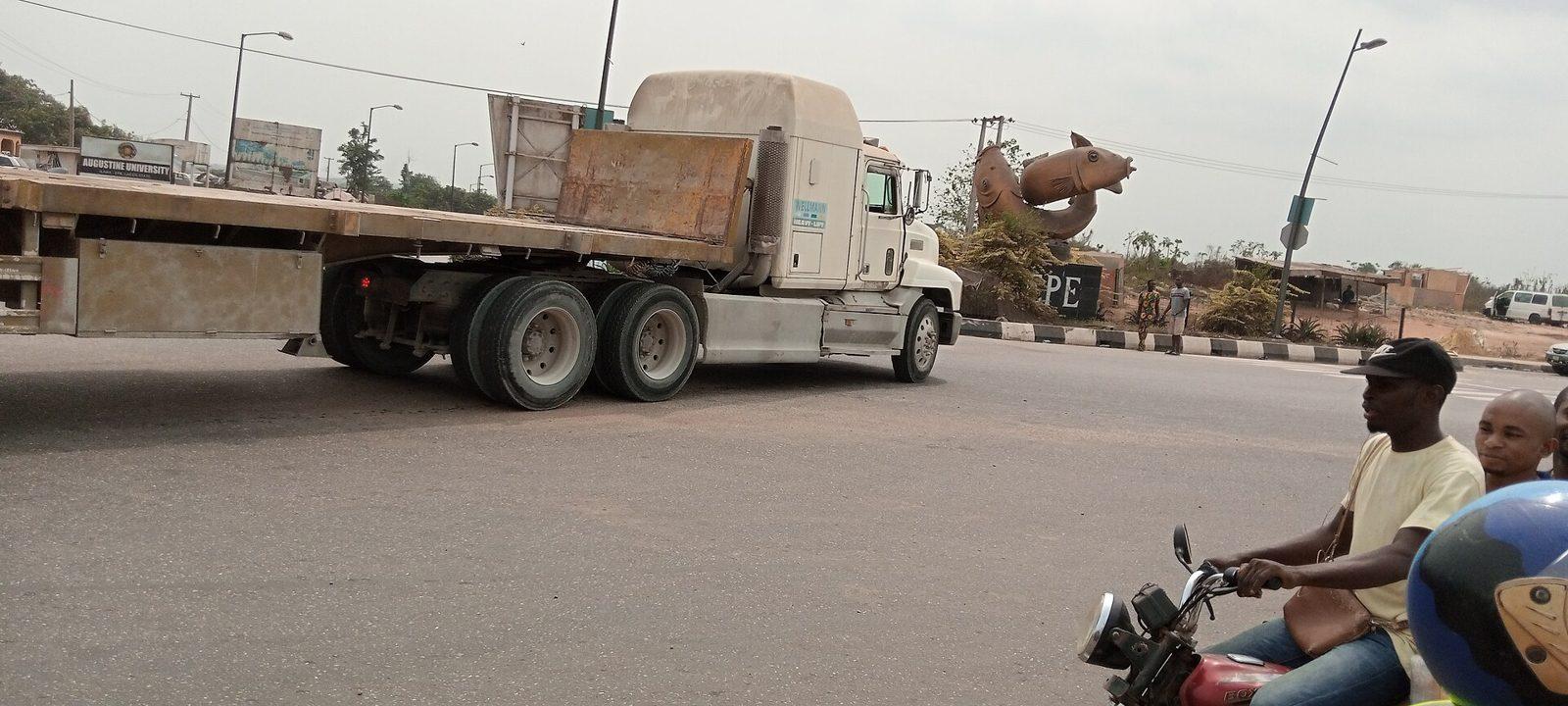
Picture a loaded articulated truck at the top of a long descent somewhere on a trunk road, late in a long day. The driver is behind schedule and the road ahead tips downhill for a few kilometres. He eases off the throttle, presses the clutch, slips the lever into neutral and lets the truck roll. It feels free. It feels efficient. The speedometer climbs, the engine settles to a lazy idle, and for the next few minutes the only thing holding back forty-odd tonnes of steel and cargo is the brake pedal.
Nothing breaks that afternoon. That is the trouble. The brakes run hot and cool again. At the bottom he grabs a gear at a road speed the engine was never meant to see, the revs flare, and the truck carries on. The damage is booked quietly, to be paid months later in a workshop, usually when you can least afford to lose the vehicle.
This is why eco-driving matters more in a heavy fleet than the name suggests. It is not a green slogan. Diesel averaged ₦3,277.47 a litre in May 2026, up 86.4% in a year according to the National Bureau of Statistics, and even after the Dangote refinery cut its gantry price to ₦1,780 on 1 October, every litre is precious. Parts are no kinder. Haulage operators told BusinessDay that re-tyring a truck that runs 16 to 22 tyres costs "a minimum of N4 million", and that was in 2024. The habits that waste diesel are, almost without exception, the same habits that destroy gearboxes, clutches and brakes. Fix one and you pay for the other.
The driver is the biggest component in the truck
Scania, which trains tens of thousands of drivers, puts it bluntly in its own driver-services brochure: drivers "are the single most important factor in fuel economy and wear and tear in the vehicle, as well as road safety" (Scania Driver Services). The same brochure says good training "will help tyres last longer, less strain on the powertrain and use less oil."
That is a manufacturer selling a training product, so read it with salt. But anyone who has run trucks on Nigerian roads knows the truth inside it. Two identical tractor units on the same corridor can come back from a year's work in very different states: one needing routine servicing, the other a clutch, a set of brake linings and a long conversation about its gearbox. The difference is rarely the truck. It is the right foot and the left hand.
The three habits that do the most quiet damage are coasting in neutral, over-revving the engine, and taking corners and bends harder than the load can tolerate. Each has a mechanical explanation, and each can now be measured.
Neutral is not a gear
Coasting is the habit most drivers defend, because it feels like it saves fuel. The UK Highway Code, which is as plain a statement of driving engineering as you will find, defines it as "a vehicle travelling in neutral or with the clutch pressed down" and lists what it does. Rule 122 says coasting means "engine braking is eliminated", "vehicle speed downhill will increase quickly", "increased use of the footbrake can reduce its effectiveness", steering response suffers on bends, and "it may be more difficult to select the appropriate gear when needed."
On a car, that is a safety lecture. On a forty-tonne truck, it is a repair invoice in slow motion.
Start with the brakes. Engine braking is meant to do the heavy lifting on a descent. A US state commercial driver's manual, quoted by Transport Topics, puts it this way: "the use of brakes on a long and/or steep downgrade is only a supplement to the braking effect of the engine." Take the engine out of the equation and the service brakes absorb everything. The manual is clear about where that ends: brakes "can fade or fail from excessive heat", and "continued overuse may increase brake fade until the vehicle cannot be slowed down or stopped."
The manual for one of the best-known engine brakes on the market makes the same point from the other side. "Frequent use of the service brakes will cause them to heat up, reducing their stopping ability," warns the Jacobs Engine Brake operator's manual. "The result can be dangerous brake fade." Even when fade never reaches the frightening stage, heat is what eats linings and drums.
A driver who coasts to save a litre of diesel is spending it on brake linings instead, and borrowing against the gearbox to do it.
Then there is the gearbox. The Highway Code's warning about selecting a gear is the polite version. In practice, the truck gathers speed in neutral and the driver, at the bottom of the hill, has to find a gear at a road speed the engine and synchronisers were not designed to meet. That is where the next habit begins.
One footnote, because it confuses many fleet managers: not all "coasting" is bad. Scania's fleet reports treat coasting as a positive and define it precisely: "Driving with a gear engaged and without fuel injection is good driving behaviour" (Scania). That is rolling in gear with the fuel cut, which is exactly what you want. Knocking the lever into neutral on a descent is the opposite. If a report shows a "coasting" figure, first ask which of the two it counts.
The redline is a warning, not a target
Over-revving turns a bad descent into a big bill. A driver can hold a gear too long under power or, far more destructively, downshift at too high a road speed, so the wheels drive the engine faster than it was built to spin.
Motor magazine's technical column describes the mechanism well. Above the redline, "the valve springs may not be strong enough to close the valves when they should be closed. The cam lobes kick them open and the valves 'float' and never close properly" (Motor). In its worst case, a valve travels far enough to be struck by the rising piston, which can bend the valve and the pushrod behind it. The engine may run on afterwards. It just runs on borrowed time.
Jacobs' exhaust brake manual is blunter: "Overspeeding can result in engine damage" (Jacobs). Its engine brake manual advises descending in "a lower gear, one that will not overspeed the engine." Choose the gear at the top of the hill, not halfway down.
Many truck rev counters mark the engine's working range as a green band, and serious fleets measure it. Scania's monthly driver coaching report includes a line for "Outside Green Band Driving (% of Engine Running Time)" (Scania). Tracked per driver, month by month, that one percentage tells you more about future drivetrain bills than any amount of shouting in the yard.
Bends, loads and the cornering you never see
Harsh cornering has two kinds of cost, a slow one and a sudden one. The slow cost is wear. Every bend taken too fast loads the steer tyres, the suspension and the fifth wheel sideways, and makes the load fight its lashings. You see it later as uneven tyre wear and loose loads.
The sudden cost is the rollover, and it falls hardest on tankers, where a liquid load moves after the truck has finished turning. A US federal study of cargo-tank rollovers between 2011 and 2014 found that "driver performance errors were the most frequently identified contributing factor", with the largest share attributed to "poor directional control, followed by overcompensation" (Volpe Center for PHMSA, Cargo Tank Incident Study). In plain language: steering too hard, then correcting too hard.
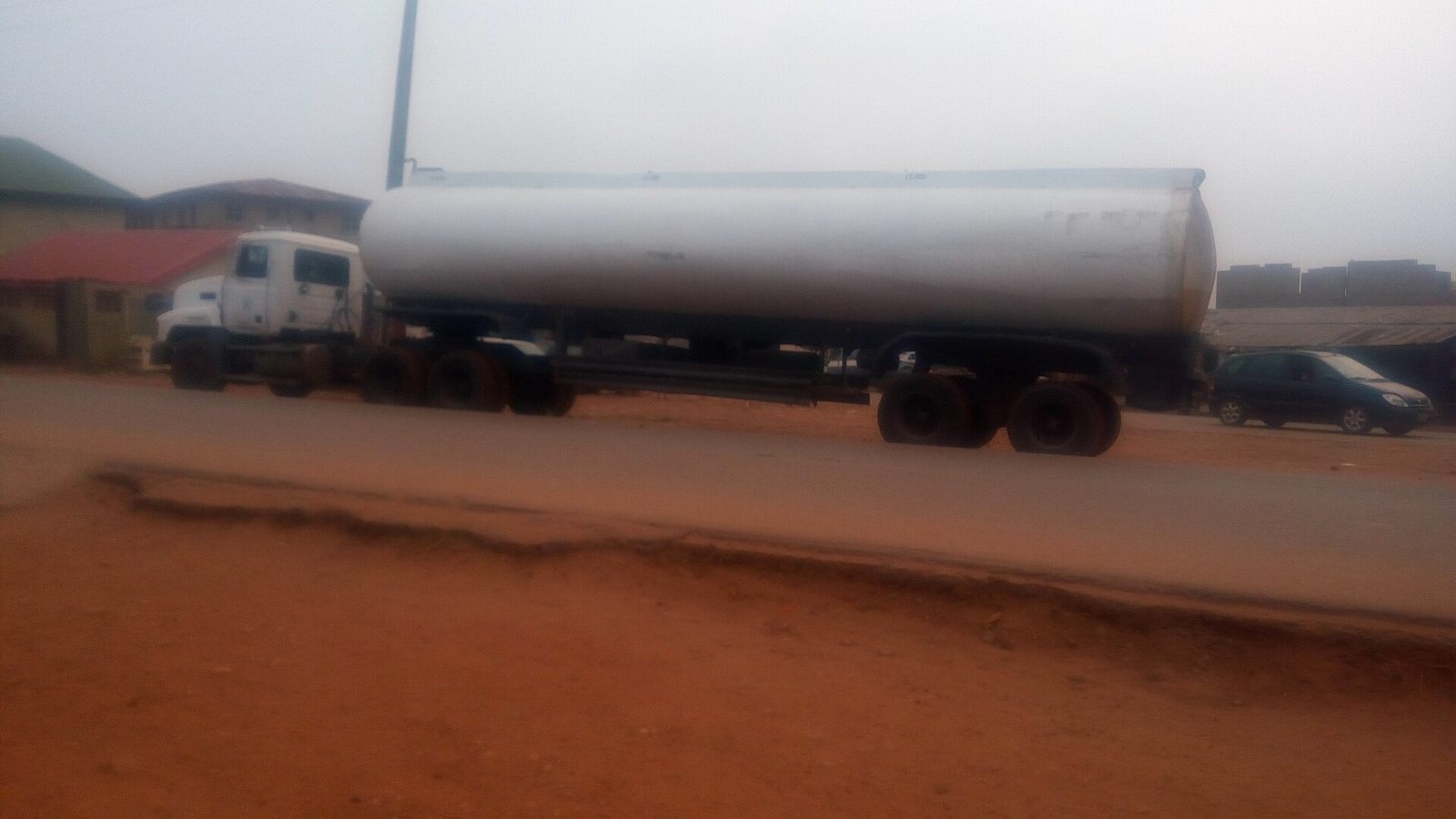
At home, the FRSC has counted the cost for years. In a 2019 presentation to the leadership of the petroleum tanker drivers' union, the Corps Marshal recorded 308 tankers involved in road crashes in 2017, 302 in 2018 and 246 in just January to August 2019, and estimated that a single crashed fuel tanker loses about 33,000 to 44,000 litres of product and "nearly N30 million on the vehicle", at 2019 prices. FRSC material also restates the national speed limits for trailers and tankers under Regulation 152(1) of the National Road Traffic Regulations: 45 km/h in built-up areas, 50 km/h on highways and 60 km/h on expressways (FRSC). If your harsh-cornering alerts show trucks reaching bends far above those numbers, you have found both a safety problem and a maintenance one.
What gets measured today, and what to ask for
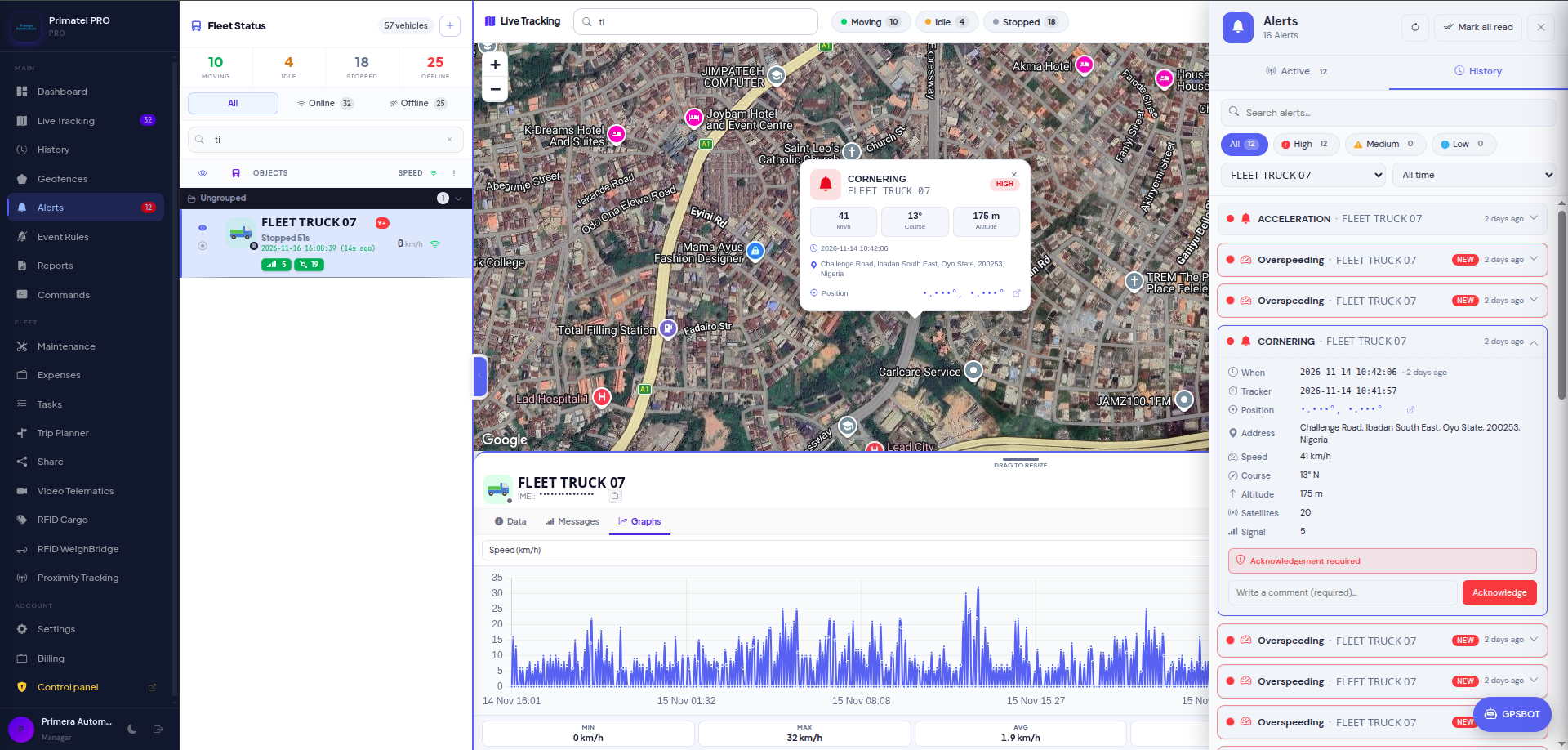
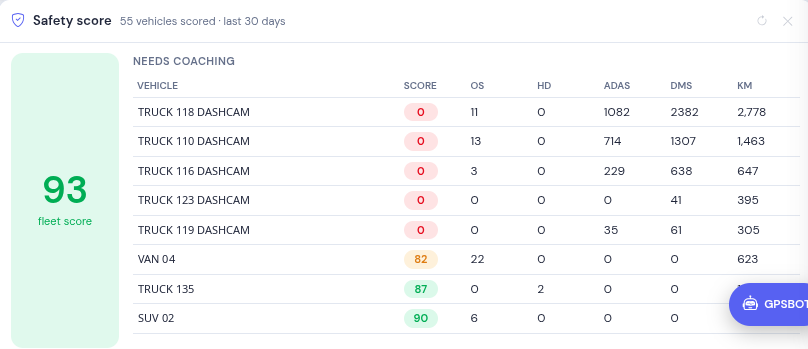
Most fleet trackers measure movement directly: an accelerometer feels the truck lurch, stop hard or swing through a bend, and GPS supplies the speed. That is how Primera Fleet scores every driver on four behaviours: overspeeding, harsh braking, harsh acceleration and harsh cornering. Each event raises an alert with the time, the place and the speed attached, and rolls into a safety score per vehicle and per fleet. Those four cover a great deal of the damage described above. They also tend to travel together: hard cornering, late braking, coasting and over-revving usually share one root, which is hurry.
Over-revving and neutral coasting are a different matter. An accelerometer cannot feel engine speed or tell whether a gear is engaged. To measure those, the telematics unit has to read the truck's own electronics. Many trucks, particularly from the big European makers, expose that data through the FMS standard, which six manufacturers developed in 2002 on top of the SAE J1939 protocol. Among the signals it standardises are engine speed, vehicle speed, accelerator pedal position, brake switch, clutch switch and cruise control.
With engine speed and road speed side by side, a capable system can flag time spent above the green band, and can infer neutral coasting when the truck is travelling fast downhill while the engine sits at idle. Whether that is possible on your fleet depends on the trucks, the tracker and how it is wired. So before you sign for any system, ask these questions:
- Can your device read the engine's own data on our trucks? Ask which models and years, whether it reads FMS/J1939 or only GPS and motion, and which signals you will actually see. Get the list in writing.
- Can it report time outside the green band, per driver? And can you set the band to match the engine maker's figures?
- How do you define coasting? In gear with the fuel cut (good), or in neutral at speed (bad)? A report that lumps them together is worse than useless.
- Who makes the connection to the vehicle network? A careless splice can create faults of its own.
If engine-data monitoring matters to your operation, talk to us about your setup. We will tell you plainly what your trucks and our hardware can and cannot report.
The fuel dividend, in naira
The good news is that the habits that protect the drivetrain also cut fuel, and the evidence for that is solid. A controlled Norwegian study by the Institute of Transport Economics found that drivers who received eco-driving training plus follow-up cut diesel use by between 5.2 and 9.0 percent compared with a control group, and noted that "the greatest potential for improvements is in the handling of the engine and gears." Scania reports an average 10% reduction in fuel consumption across more than 50,000 trained drivers.
Take the cautious end and put it in naira. The table below uses round assumptions so you can swap in your own figures.
| Item | Assumption | Figure |
|---|---|---|
| Distance per truck per month | Long-haul tractor unit | 8,000 km |
| Fuel economy | Loaded and empty legs averaged | 2.5 km per litre |
| Diesel used per month | 8,000 ÷ 2.5 | 3,200 litres |
| Diesel price | Dangote gantry price, October 2026 (pump prices are higher) | ₦1,780 per litre |
| Monthly diesel bill | 3,200 × ₦1,780 | ₦5,696,000 |
| Saving at 5% | Bottom of the Norwegian range | ₦284,800 a month |
| Saving per truck per year | × 12 | about ₦3.4 million |
Now set that beside the cost of the damage. On Truck1's Nigerian marketplace, a used Mercedes-Benz Axor G85-6 gearbox with 478,385 km on it was listed at €1,750, about ₦2.6 million, excluding VAT and before freight, duty, clearing and fitting. A remanufactured gearbox of another popular make was listed at €3,600, about ₦5.3 million, again before freight. Add the days the truck sits waiting for parts, and one avoided gearbox job is worth roughly a year of fuel savings on that truck. The fuel saving is the dividend you can count. The repairs that never happen are the quieter, larger return.
Enforcing it without starting a war
Drivers resist monitoring that feels like surveillance and accept monitoring that feels fair. The difference lies in how the data is used. The loop that works has three steps.
- Detect. The system raises an event: a harsh corner on a known bend, a cluster of hard braking on a descent, a burst of overspeeding. It records the evidence automatically.
- Review. A manager looks at the event before anyone talks to the driver. One harsh brake to avoid a goat is good driving. Twelve on the same hill every week is a habit. In Primera Fleet, serious alerts stay open until someone acknowledges them with a comment.
- Coach. The conversation is about the record, not opinion: this place, this time, this speed. Show the driver his own trace on the map. Most drivers have never seen how their driving looks from the outside, and many change once they do.
Compare drivers on the same routes and loads, never a Lagos city run against an empty return leg from Kano. Praise good scores publicly and handle poor ones privately. A fuel bonus funded from the fuel you saved costs you nothing. And keep at it: Scania's own brochure notes that the effect of one-off training "decreases over time", which is why monthly coaching matters more than the first classroom day.
What to do on Monday morning
- Pull last month's scores. Open the safety score panel, sort by score, and list the five vehicles with the most harsh cornering and harsh braking events. Those are your gearbox and brake candidates as well as your safety risks.
- Map the hotspots. Look at where those events cluster. If they bunch on the same descents and bends, brief every driver on those exact places, with the gear to be in before the top.
- Set the rule in writing. No neutral coasting on any descent, ever. Choose the gear at the top of the hill. Stay within the rev counter's green band. Respect the trailer and tanker limits of 50 km/h on highways and 60 km/h on expressways.
- Tie the workshop to the data. Next time a truck comes in for brakes or a clutch, pull up its driver's scores for the previous three months before you sign the invoice.
- Book the coaching. Fifteen minutes per driver, his own trace on the screen, one habit to change. Repeat monthly.
The cheapest gearbox you will ever buy is the one you never have to replace.
About Primera Automations
Primera Automations helps Nigerian fleets see how their trucks are actually being driven. Our driver safety tools score every trip on overspeeding, harsh braking, harsh acceleration and harsh cornering, and our fleet platform ties those scores to fuel, maintenance and location data, so managers can coach the habits that wear out heavy vehicles before they turn into workshop bills.
Sources
- ThisDay, Fuel Inflation Persists as Diesel Soars 86%, Petrol Climbs 55%, Kerosene Up 37% in One Year
- Legit.ng, Dangote Announces New Diesel Price, Cuts Rate by N70 From Today
- BusinessDay, Truckers' woes worsen as diesel price doubles
- Scania, Driver Services brochure (PDF)
- Scania, Driver training
- GOV.UK, The Highway Code: rules 103 to 158, including rule 122 on coasting
- Transport Topics, Long Downhill Grades Require Engine Braking, Experts Say
- Jacobs Vehicle Systems, Jacobs Engine Brake Operator's Manual (PDF)
- Jacobs Vehicle Systems, Jacobs Exhaust Brake Operator's Manual (PDF)
- Motor, Trouble Shooter, May 2009
- John A. Volpe National Transportation Systems Center for PHMSA, Cargo Tank Incident Study (CTIS): Rollover Data and Risk Framework
- Federal Road Safety Corps, Meeting with the leadership of NUPENG-PTD (2019) (PDF)
- Federal Road Safety Corps, Speed Limiting Device Implementation in Nigeria: The Journey So Far (PDF)
- DigiKey, FMS Standard for Commercial Vehicles: Fleet Management System
- Science Norway, Truckers can help save money and the environment at the same time
- Truck1 Nigeria, Gearboxes for Mercedes-Benz Axor trucks
- Truck1 Nigeria, Remanufactured gearbox listing (ID 7826944)