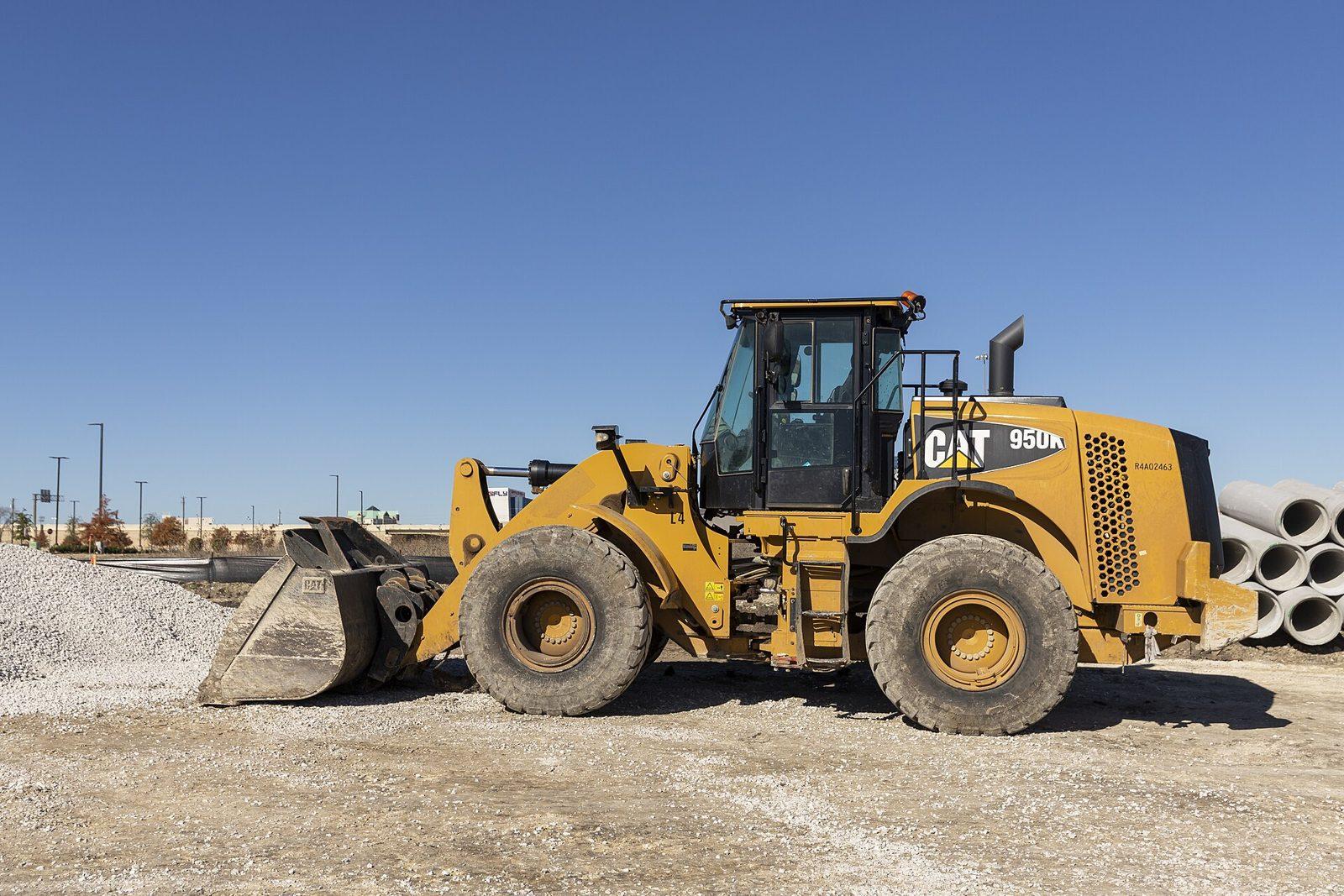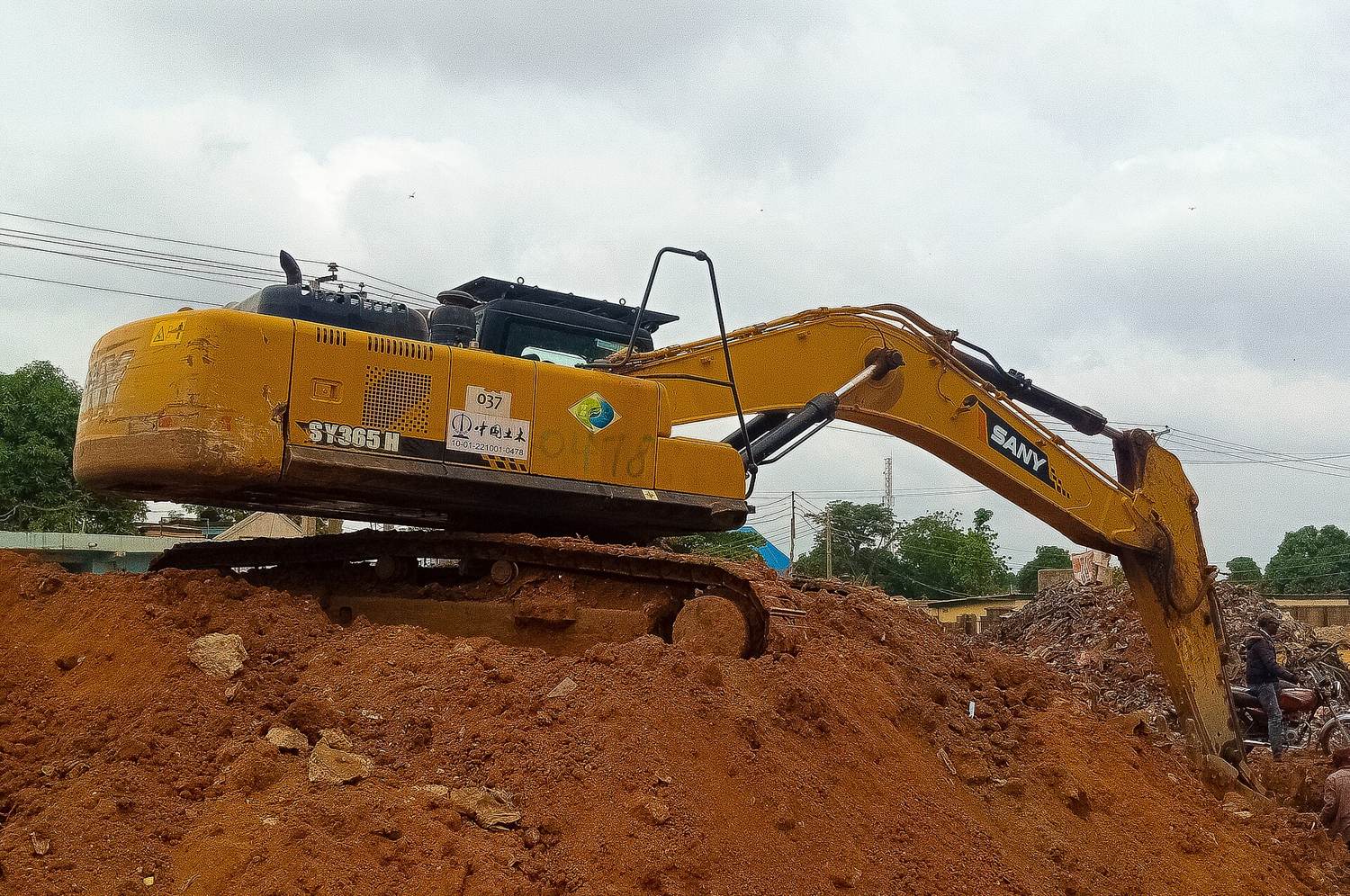
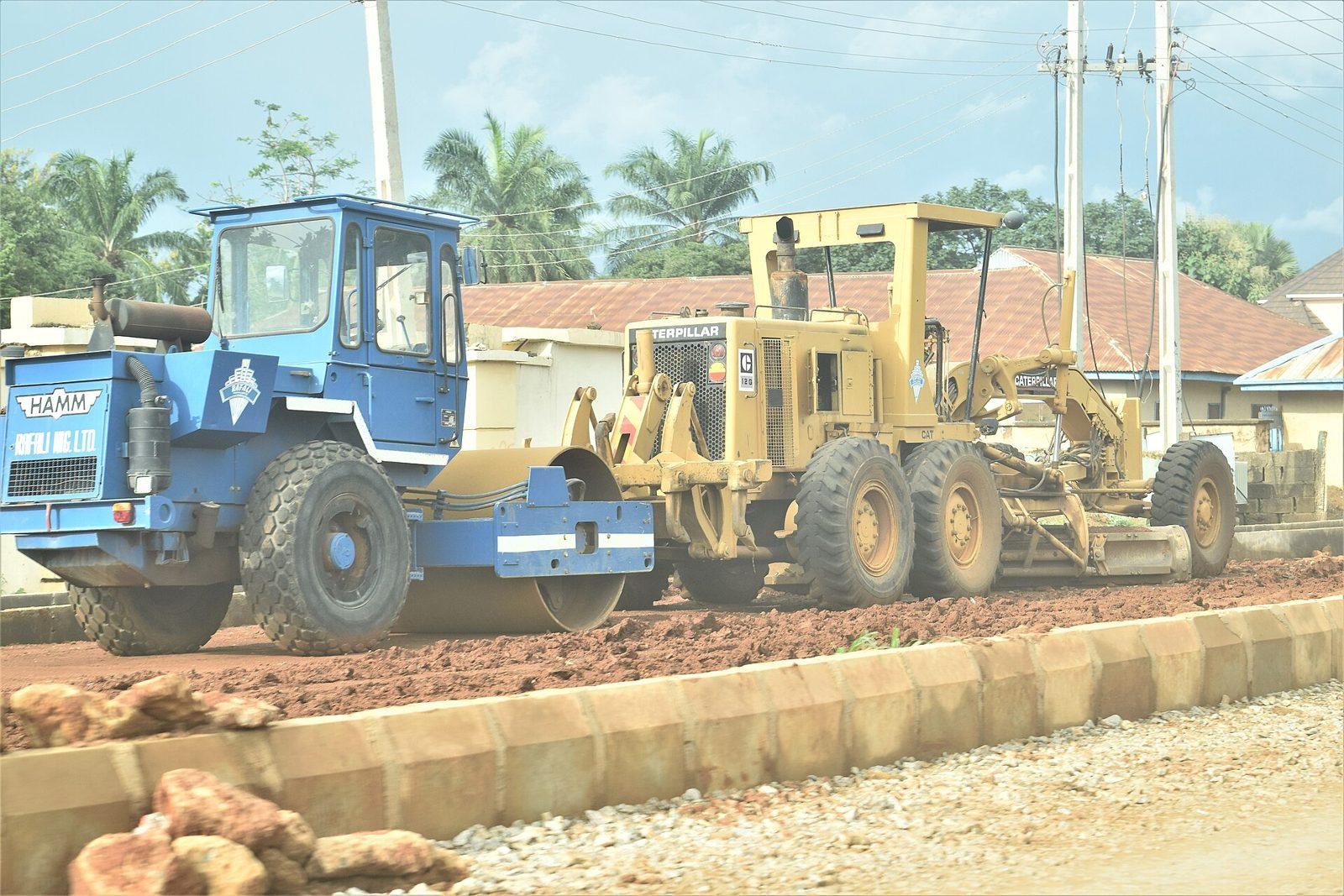
It is a little after six on a Saturday evening on a road project somewhere between Lokoja and Abuja. The site closed at four. The engineers have gone home, the security man is at the gate listening to the radio, and the excavator is parked at the far end of the cut, where it always is.
Except that by seven it is not there. It is two kilometres down a laterite track, digging the foundation of a private house for a man who paid cash. The operator knows the machine, knows the route and knows that nobody will check. On Monday morning the excavator is back in its spot, a little muddier, with a little less diesel and six more hours on the meter. The site diary says nothing.
This scene is a composite, not a reported case. But ask any plant manager in Nigeria whether it sounds familiar and watch the face they make.
The weekend side job is the quiet cousin of equipment theft, and it lives in exactly the same gaps: remote sites, thin supervision after hours, machines that cannot report where they have been. It costs you diesel at a time when the national average retail price of diesel stood at ₦3,277.47 a litre in May 2026, according to the National Bureau of Statistics figures reported by ThisDay, and still around ₦1,780 at the Dangote refinery gantry from 1 October, before transport to site. It costs you engine hours and wear you never priced. And if the machine hurts someone or damages property on a job you never agreed to, you will be the one answering the questions.
The good news is that the same tools that catch the side job also make your site a harder target for the people who want to take the machine away for good.
The shift nobody scheduled
A single unauthorised Saturday costs more than most managers expect. Komatsu, writing about fuel costs in September 2026, put it plainly: "A standard excavator might burn around 16 litres of fuel an hour". Use that figure, assume a six-hour side job, and price diesel at the refinery gantry rate rather than the higher price you actually pay on site.
| Item | Assumption | One Saturday | Every Saturday for a quarter (13 weeks) |
|---|---|---|---|
| Engine hours | 6 hours per side job | 6 hours | 78 hours |
| Diesel burned | 16 litres per hour | 96 litres | 1,248 litres |
| Diesel cost | ₦1,780 per litre (gantry, before haulage) | ₦170,880 | ₦2,221,440 |
| Wear and servicing | Hours brought forward on undercarriage, hydraulics and engine | Not priced here | Not priced here |
| Your revenue from the job | ₦0 | ₦0 |
The fuel rate and diesel price are the published figures linked above; the six hours and the weekly frequency are illustrative. Plug in your own machine's burn rate and your delivered diesel price.
Notice what is missing from the table. The operator was paid in cash by someone else; your company carried every cost of the work. Across a fleet of ten machines on three sites, the arithmetic stops being a nuisance and starts being a line in the management accounts that nobody can explain.
There is also a darker version. A machine that can leave the site for a side job can leave the site for good, and the people best placed to know it are the people with the keys.
What the theft data says about timing and recovery
Some of the most detailed public data on equipment theft comes from the United States, where the National Equipment Register (NER) and the National Insurance Crime Bureau (NICB) have published joint annual reports. Their 2015 Theft Report recorded 11,493 reported equipment thefts that year and only 2,552 recoveries. In NER's words: "Only 22 percent of stolen equipment was recovered in 2015."
Its explanation for the poor recovery rate reads like a description of a typical Nigerian site. Top of the list: "delays in discovery of thefts and subsequent delays between time of occurrence and reporting", followed by inaccurate or missing ownership records. Its summary is blunter still: "Most thefts are from work sites with little or no security." Its loss estimates also exclude "short-term rental costs, project-delay penalties, and wasted workforce and management time", the costs that usually hurt a contractor most.
A theft discovered on Monday morning is a theft with a two-day head start.
Timing matters. In a 2024 snapshot of the Thanksgiving holiday period, counting from the Tuesday before the holiday to the Monday after, NER logged 201 equipment theft incidents with a total loss value of $5,803,717. Worksites topped its list of targeted locations, and NER noted a rise in thefts reported during that holiday over the previous five years. The American calendar is not ours, but the lesson travels: long weekends and public holidays, when sites empty out and supervision thins, are when your machines are most exposed. In Nigeria that means Christmas, Easter and the Sallah breaks.
One case study in the same 2015 report shows what a fast signal is worth. On a Saturday afternoon, after a rental store had closed, a customer called to say that the contractor she had hired a skid loader for had disappeared with the machine. "On Monday by 8 a.m., the rental company was able to locate the unit" using NER's equipment tracking system, police met at the location, and the company sent a truck to collect its machine. The contractor, the report says, "was found with multiple pieces of stolen equipment."
That machine came back because it could report where it was. Most do not.
Closer to home: batteries, alternators and a punched fuel tank
We know of no published Nigerian dataset to compare with NER's, so the evidence here is anecdotal, and it comes from the courts. Two recent cases are worth reading not for their verdicts, which were pending at the time of reporting, but for what they say about how machinery is attacked.
In January 2026, a 38-year-old man was arraigned at a Chief Magistrates' Court in Abuja over the alleged theft of a battery, a key starter, an engine fan, an alternator and diesel from a Caterpillar belonging to a construction company, parked near the company's gate at Gwarinpa. The prosecution said the machine's fuel tank had been punched and diesel taken, and valued the items and diesel at ₦8 million. He denied the charges. The prosecutor told the court that "efforts made to recover the stolen diesel and other spare parts proved abortive," Peoples Gazette reported, citing the News Agency of Nigeria.
The same month, a 21-year-old was arraigned in Ota, Ogun State, accused of maliciously damaging an excavator component valued at ₦5 million and stealing two large batteries valued at ₦500,000, according to the News Agency of Nigeria. He pleaded not guilty.
Neither case involved a machine driven away. Both involved a parked machine attacked where it stood, which argues for alerts that fire when something happens to the machine, not just when it moves.
It is also worth noticing what the Federal Government did when it set up Coastal Road Guards to protect the new Lagos–Calabar coastal highway from vandals. According to ThisDay, tracking devices were installed on the guards' motorcycles so authorities could monitor their movement and confirm the bikes were used only for official duties. If the people guarding the road are tracked to make sure their vehicles are not misused, there is nothing insulting about doing the same with an excavator worth many times more.

Drawing a fence no one can climb over
A geofence is a boundary you draw on a map. When a tracked machine crosses it, the system records the event and, if you have set a rule, tells someone immediately.
On a construction project the geofences almost draw themselves. There is the active work zone, which may be a long ribbon on a road job. There is the base camp or plant yard where machines sleep. There may be a borrow pit, a quarry or a batching plant that machines legitimately visit. Everything outside those shapes is, by definition, somewhere your excavator has no business being.
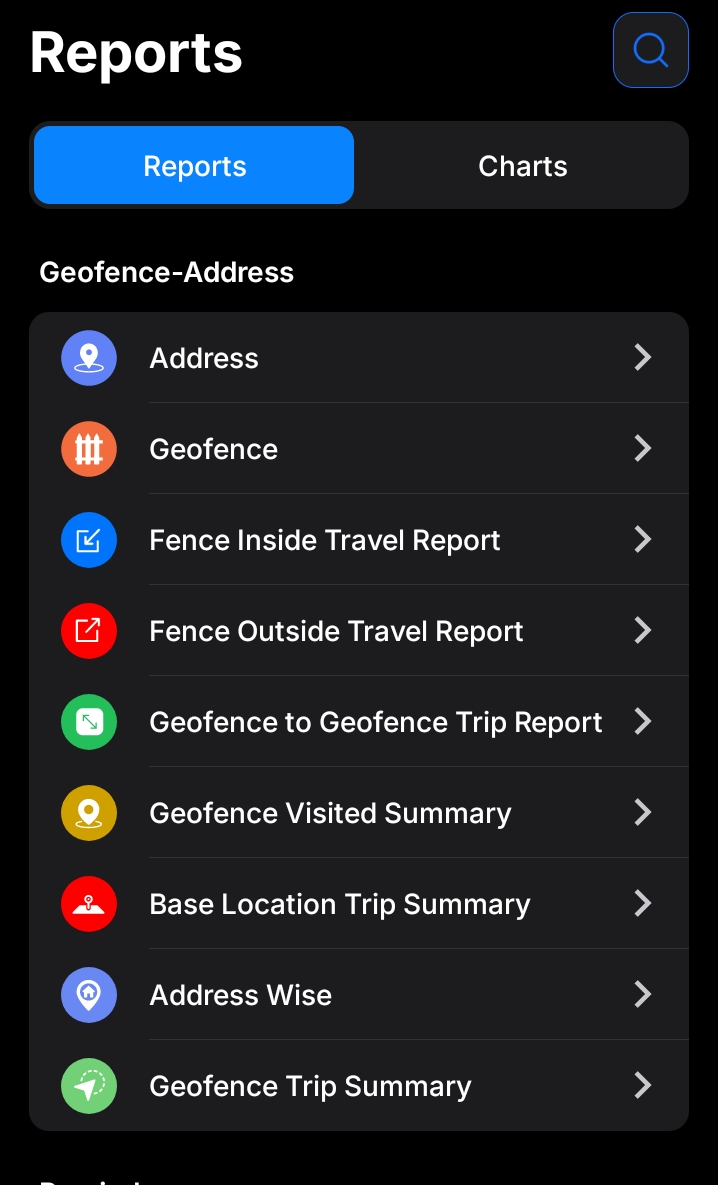
On the Primera Fleet platform you can draw those boundaries, attach rules to them and then read back what actually happened through geofence reports: which machine visited which fence, how long it stayed, and what it did outside the fences altogether. The history playback then lets you replay the route a machine took, so a two-kilometre detour to a private plot is no longer a rumour. It is a line on a map with times attached.
Size the fences honestly: a boundary drawn too tight around a moving road project will fire all day and train everyone to ignore it. And update them as the job moves, because a geofence that still marks last quarter's chainage gives you false comfort.
The ignition is the alarm
Geofences tell you where. Time-based rules tell you when, and for the weekend side job, when is the giveaway.
Every site has working hours. Set an event rule so that if a machine's ignition comes on, or the machine starts moving, outside those hours, an alert goes straight to the people who need to know: the site manager, the plant manager, and ideally someone who is not in the same reporting line as the operators. The alert says which machine, where, and when. You do not have to wait until Monday to discover that Saturday happened.
A few habits make these rules work in real life rather than on a slide:
- Build in the legitimate exceptions. Night pours, emergency drainage work after a storm, a scheduled Saturday shift. Agree them in advance and log them, so that an out-of-hours alert always means something.
- Treat a power cut as an event. A tracker that suddenly stops reporting on a parked machine may have been disconnected. The Gwarinpa case above involved a battery and alternator being removed; a machine that falls silent at 2 a.m. deserves a phone call.
- Watch the fuel as well as the engine. If you fit in-tank fuel-level sensors, sudden drops are logged with time, place and litres. On one truck our fuel monitoring recorded 67 drain events and 739.54 litres siphoned in a single week. A punched fuel tank on a parked excavator is the same story with a different machine.
- Escalate by time, not by mood. If an out-of-hours ignition alert is not acknowledged within, say, fifteen minutes, it should go up a level. Write that rule down.
The hour meter is the only witness on site that never takes a weekend off. Telematics simply lets you hear what it has to say while it still matters.
Remote cut-off: a brake, not a weapon
Remote engine cut-off, or immobilisation, is the feature everyone asks about first and should think about longest. It lets an authorised person send a command that prevents the engine from running. Used well, it stops a machine from being driven off site, or from being started again once it has been found where it should not be.
Used badly, it is dangerous. An excavator with its boom raised, a tipper on a slope, a roller beside a live carriageway: none of these is a situation in which you want an engine to die without warning. That is why Primera applies remote cut-off safely, and why your own procedure should be stricter than your instincts.
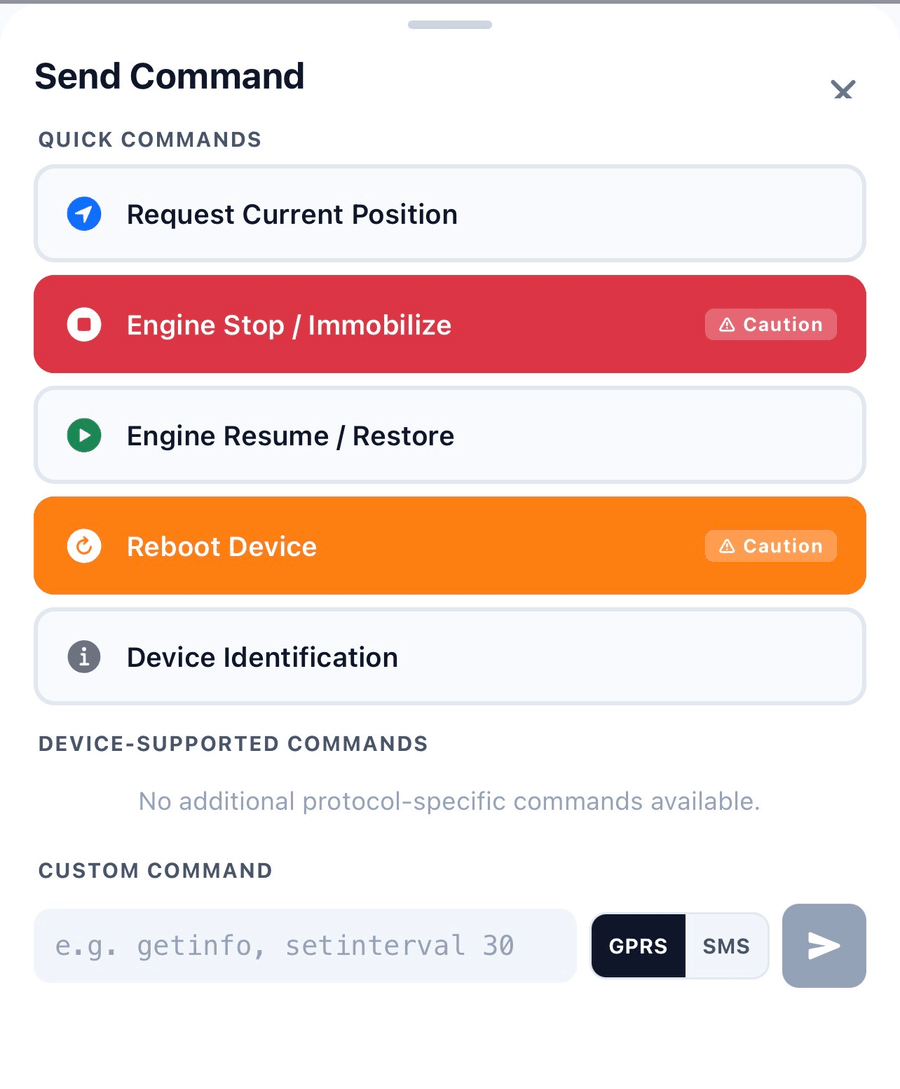
A sensible protocol looks something like this:
- Confirm before you act. Check live tracking and the recent history. Is the machine really outside its fence, outside hours, without an approved exception?
- Call first. Ring the operator and the site supervisor. Many alerts have innocent explanations, and you want to find them before you touch the engine.
- Immobilise only when it is safe. The command should be used when the machine is stationary or at walking pace and in a safe position, not mid-lift or on a public road at speed.
- Restrict who can press the button. Two or three named people, not every user with a login.
- Record everything. Who sent the command, when, why, and who restored the engine afterwards. If the matter ever ends up in a disciplinary hearing or a police station, that log is your evidence.
Policy first, technology second
None of this works if the operators first hear about tracking when someone is summoned to explain an alert. The fairest and most effective approach is the boring one.
Write a short equipment-use policy. Say plainly that company machines may not be used for private work, that machines are tracked, and that out-of-hours use without written approval is a disciplinary matter. Have operators sign it. Control keys properly, with a sign-out sheet at the site office rather than keys living in operators' pockets. Make the site supervisor responsible for confirming each evening that every machine is inside its fence, and make the data the thing that checks the supervisor.
Then use the data for more than policing. The same tracking shows utilisation, idling and engine hours by machine, which tells you whether a site really needs four excavators. Operators who see tracking used to plan work and schedule maintenance are far less likely to see it as a spy in the cab.
What to do on Monday morning
- List every machine and where it sleeps. Excavators, graders, rollers, loaders, tippers, generators on trailers. Note which are tracked and which are not.
- Pull last month's engine hours and compare them with your site diaries. Any machine whose hours exceed the days it was rostered for has a story to tell.
- Draw your geofences. Work zone, plant yard, borrow pit, any other legitimate destination. Keep them realistic and update them as the job moves.
- Set out-of-hours ignition and movement alerts for every machine, with named recipients and an escalation rule if nobody responds.
- Plan for the long weekends. Before Christmas, Easter and Sallah, park machines inside the yard, fence them, and confirm that alerts reach someone who is actually on duty.
- Write and sign the equipment-use policy, including who may authorise out-of-hours work and who may use remote cut-off.
- Ask your telematics provider to walk your site, not just your fleet list. If you want us to do that with you, talk to us.
The machine that worked last Saturday will probably work next Saturday too. The only question is whether, this time, somebody finds out before Monday.
About Primera Automations
Primera Automations installs and supports fleet telematics for construction, logistics and industrial operators across Nigeria, from offices in Lagos, Abuja, Warri, Asaba and Aba. The Primera Fleet platform gives plant managers live tracking, geofences, out-of-hours event alerts, history playback, fuel monitoring and safely applied remote engine cut-off, so a machine can tell you where it spent the weekend. Talk to us about your sites.
Sources
- ThisDay via AllAfrica, Fuel Inflation Persists As Diesel Soars 86 Percent, Petrol Climbs 55 Percent, Kerosene Up 37 Percent in One Year
- Legit.ng, Dangote Announces New Diesel Price, Cuts Rate by N70 From Today
- Komatsu Australia, Same job, less fuel: rising costs put hybrid excavators back in focus
- National Equipment Register and National Insurance Crime Bureau, 2015 Theft Report
- National Equipment Register (Verisk), Thanksgiving Heavy Equipment Theft Trends and Security Tips 2024
- Peoples Gazette (News Agency of Nigeria), Gardener arraigned over alleged theft of caterpillar parts, diesel worth N8 million
- News Agency of Nigeria, Man, 21, arraigned for allegedly damaging excavator
- ThisDay, Road Guards, Deploys Trackers to Curb Rising Vandalism on Lagos-Calabar Highway